

I am writing this blog to say goodbye to my readers, my friends, and the small community that has followed BantamJoe.com over the years.
BantamJoe.com will come to an end on June 7, 2026. If there are any blogs you would want to archive, now is the time to do. Afterwards, all content will be discarded.
I no longer have the finances, the time, or the will to continue writing to or maintaining the site the way it deserves to be maintained. This is not an easy decision, but it is the right decision for where I am in life now.
I started this website in 2021, during a time when the world was running for cover from fear, confusion, lockdowns, mandates, and nonstop messaging about Covid. I was fairly new to public blogging, but I was not new to systems, technology, electronics, software, military communications, institutional behavior, or the way information moves through controlled channels. I had spent most of my life studying how systems work, how signals move, how power is routed, how information is filtered, and how people can be conditioned by the architecture built around them.
At that time, I became deeply concerned about what I was seeing. I was wary of a pharmaceutical industry that had been granted broad liability protections while experimental medical products were being promoted at global scale. I questioned the speed, the pressure, the censorship, the lack of open debate, and the way dissenting voices were dismissed. As I kept reading, I came to believe that many claims being presented to the public were built on weak assumptions, institutional trust, and circular authority rather than the kind of clear, physical, testable evidence I expected as someone trained in electronics, engineering, software, signal logic, and systems thinking.
That is when the red flags went up for me.
Before Covid, I had been working on several technology projects. Some involved AI, in fact, lots of AI. Some involved blockchain. Some involved smart contracts, smart edge IoT devices, game systems, and interactive worlds. I was not anti-technology. I have never been anti-technology. I grew up with technology. I built with it, repaired it, programmed it, studied it, and used it professionally for decades.
My electronics and software path began in the 1970s and 1980s. I later served in the U.S. Army, where I worked around nuclear missile systems and later joined Army Special Operations Forces as a communications operator. I served during the Persian Gulf War and completed roughly 13 years of service before my vision problems began taking a serious toll in the mid-1990s.
After the military, I continued as best as I could in electronics, software, and video game development. I worked on game-related systems, studied AI heavily, and kept building even as my vision became more difficult to work around. I eventually toned down my professional engineering ambitions and moved to the Appalachian Mountains of Kentucky after 9/11, leaving Brooklyn, New York behind.
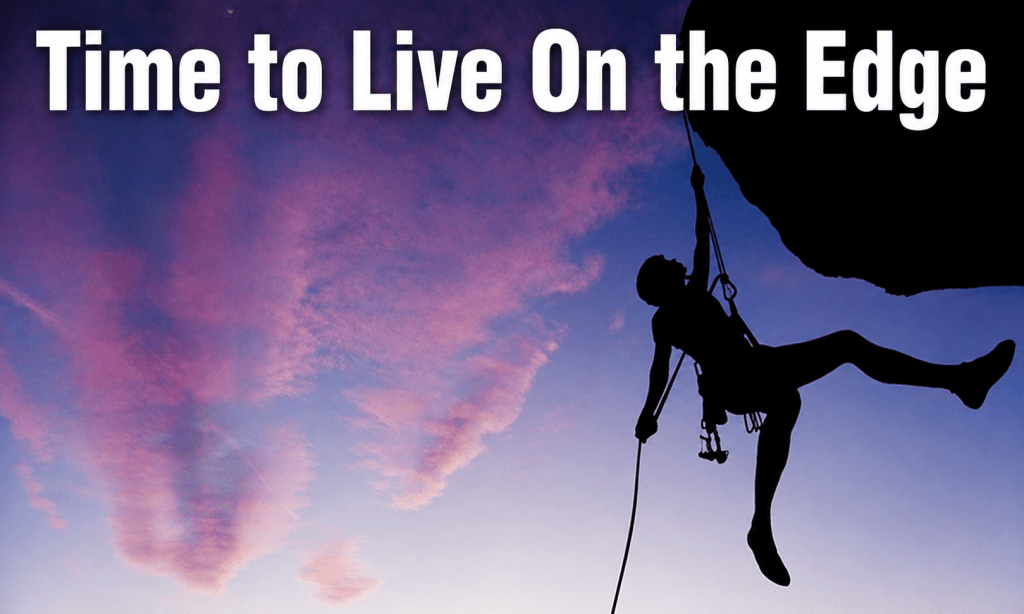
Kentucky became a different kind of classroom for me. I spent years sky-diving (with limited vision), rock climbing, hiking, rafting, cave exploring, raising my children, coaching Little League baseball, and continuing to build personal electronics and software projects, again with impaired vision. I read constantly. I read math, physics, quantum mechanics, electronics, software, artificial intelligence, control systems, game development, economics, and anything else that helped me understand how the world behaved and was being wired together.
After the financial crash of 2008, I came across blockchain and Bitcoin. I studied them deeply. At first, I looked at them through the lens of game development. I wondered how blockchain could be used for game platforms, player tracking, secure leaderboards, tokenized game assets, fictional currencies, asset trading, and cybersecurity.
Then Ethereum came along with smart contracts.
That changed everything for me.
Once I learned how to program smart contracts and conditional money and began thinking about how they could be integrated into game systems, I quickly realized how easily the same logic could be applied to the physical world. Not just games. Not just leaderboards. Not just fictional economies. Real people. Real property. Real identity. Real money. Real behavior. Real access. Real restrictions.
That was the moment I understood the danger.
What looked like a useful game mechanic could become a control grid. What looked like digital convenience could become programmable dependency. What looked like innovation could become a digital dystopia.
That realization is one of the reasons I created BantamJoe.com.
One of my early articles, which still needs revision, was my attempt to warn people in plain language about what I believed was coming:
From there, the blog became my outlet for studying and explaining the machinery behind the modern world: technocracy, AI, blockchain, digital ID, programmable money, central bank systems, surveillance infrastructure, global governance, health policy, ESG, SDGs, Agenda 21/30, war, propaganda, institutional capture, and the slow merger of public authority with private corporate power.
Now we are in 2026, and I see the world as more dangerous, more unstable, and more technologically managed than it was when I started writing.
Organizations and institutions such as the UN, WEF, CFR, IMF, World Bank, BIS, CDC, GAVI, WHO, major NGOs, central banks, defense contractors, AI companies, financial giants, and policy think tanks are all pushing pieces of the same future. Not always as one single conspiracy, but as a converging system. A system of digital identity, programmable finance, behavioral scoring, artificial intelligence, automated governance, public-private control, and dependency by design.
I am not part of that decision-making class.
Most of us are not billionaires. We are not central bankers. We are not sitting in Davos, Basel, Geneva, Washington, Brussels, London, Beijing, Dubai, or any other power center deciding how the next phase of civilization will be structured.
So I believe we need another approach.
I do not believe we can face that machine head-on by pretending we have more power than we do. I believe we need to reduce our dependency on it. We need to rebuild local strength. We need to help each other. We need to become useful again to our families, neighbors, and communities.
That means learning practical skills. Growing food. Repairing tools. Building local networks. Sharing knowledge. Giving without always expecting something in return. Helping each other instead of waiting for broken institutions to save us.
I want to give what I can. I want to teach what I know. I want to repair what I can repair, grow what I can grow, build what I can build, protect what is good, and strengthen what is local.
I wrote more about that idea in my previous blog:
It is not perfect, but it is a beginning. The point was simple: the old extraction system is breaking, and if we do not want to be swallowed by the next system, we need to become less dependent, more capable, more grounded, and more connected to the people and resources around us.
That brings me to where I stand now.
I currently live in southern Florida with my girlfriend, Toni Renee. Over the past four years, with the limited income I receive from VA disability and Social Security, I have been slowly accumulating tools, equipment, components, and materials. We live in a small two-bedroom home. Together, we are working on a garden and preparing to plant fruits, vegetables, and other useful plants.
One of the bedrooms has become my workshop and crafting room. I have filled it with electric power tools, a laser engraving tool, hand-powered tools, electronic testing equipment, components, parts, scrap materials, motors, and the kind of “beautiful junk” that can become something useful in the right hands.
My goal now is simple.
I want to live off the edge of the grid.
Not fully inside it. Not pretending I can completely leave it. I want to use what is useful, reduce what is controlling, and build practical backup systems for the things that matter most.
For most people, including myself, going fully off-grid is difficult, expensive, and not always practical. But living off the edge of the grid is possible. That means reducing dependency where it matters most. It means having alternatives for power, water, food, communication, repair, and basic household function. It means not needing an app, a cloud account, a subscription, or a corporate permission structure for every basic need.
This has to be pragmatic.
The first priority is not perfection. The first priority is survival, function, and independence in layers.
The essentials come first: power, water, food, shelter, sanitation, cooking, lighting, refrigeration, tools, communications, medical supplies, and basic security. These are the systems that keep a home functioning when money is tight, supply lines fail, power is unreliable, or institutions become more restrictive.
After that comes durability: backup generation, batteries, solar, water capture, filtration, stored food, spare parts, printed manuals, local communications, and practical repair skills.
After that comes expansion: a larger garden, better irrigation, fruit plants, medicinal plants, greenhouse systems, better storage, improved structures, animal systems, barter relationships, and lower household dependency.
I do not have to build everything at once. I have to build the most important things first, test them, improve them, and then build outward.
That means reducing nonessential smart devices, replacing cloud-dependent systems with local or manual alternatives where possible, lowering my electrical demand, separating critical loads from noncritical loads, and planning practical backup power. It also means thinking seriously about water collection, storage, filtration, purification, and testing.
It means building the garden in stages: soil improvement, raised beds or containers, irrigation, composting, mulch, heirloom seed organization, seed-starting, planting schedules, crop rotation, pest control, disease control, and pollination support. Staple vegetables come first. Fruit plants, perennials, medicinal plants, seed saving, and food preservation can build from there.
It means continuing to collect tools, repair parts, consumables, wire, connectors, fittings, filters, hoses, blades, fuses, batteries, and the small parts that keep systems working when stores, shipping, or finances are not available.
It means learning and practicing the skills that matter: carpentry, plumbing, electrical safety, small-engine maintenance, generator maintenance, gardening, pruning, soil-building, food storage, first aid, local communications, and practical repair.
First, I keep the lights on, keep water available, keep food growing or stored, keep tools working, and keep the home livable.
Then I improve efficiency.
Then I add redundancy.
Then I expand.
That is the work in front of me now.
I have spent years writing about the machinery being built around us. Now I have to spend more time building the life in front of me.
My answer is not despair.
My answer is reinvention.
I have to keep learning useful skills. I have to get my hands dirty. I have to repair something, grow something, build something, teach someone, and help my neighbor. I have to store food if I can, save seeds if I can, reduce debt and recurring bills where possible, build local barter and support relationships, store printed manuals and important records offline, and test my systems before relying on them fully.
I have to give more than I take when possible.
I also have to enjoy life while I still have life in front of me.
If you believe in God, pray. Keep that spiritual connection alive. Ask for wisdom, strength, protection, humility, and courage. Do not let fear become your master.
If you do not believe in God, then still stay connected to life. Pray in your own way, even if that means speaking to nature, sitting quietly with the trees, listening to the birds, touching the soil, or simply being thankful for another day. Nature has a way of reminding us that life still exists outside the machine.
Talk to nature. Respect creation. Help people. Do not let this system turn you cold.
Technology itself is not the enemy. I have loved technology since I was a child. The danger is not the tool. The danger is the hand that wields it, the system that weaponizes it, and the loss of human conscience behind it.
That is what I have tried to warn about.
BantamJoe.com was never just a blog to me. It was a signal. It was my attempt to make sense of a changing world and share that understanding with anyone willing to read. Some of the writing was rough. Some of it needs revision. Some of it was written while I was tired, frustrated, angry, or worried. But the purpose was always sincere.
I wanted people to think.
I wanted people to question.
I wanted people to see the architecture forming around them.
Now it is time for me to step away from the screen and put more of my energy into the physical world: the garden, the workshop, the home, the tools, the local systems, the people near me, and the life still in front of me.
To everyone who read my work, shared it, disagreed with it, challenged it, supported it, or simply stayed with me along the way, thank you.
It has been a pleasure having you as readers.
More importantly, it has been a pleasure having you as a community of friends.
I wish you all well.
Joseph Gonzalez
Bantam Joe
quantumxo@yahoo.com
 Bantam Joe
Leave a comment