

Quantum Resonance Patterns of Atomic Elements and Their Cymatic Visualization
This blog investigates the theoretical and mathematical foundation for generating cymatic resonance patterns of atomic elements based on their unique quantum properties. By utilizing constants of quantum mechanics, such as the gravitational constant and Planck’s reduced constant, along with atomic properties specific to each element, we demonstrate how resonant frequencies can produce visual representations of atomic structures. This study offers a detailed exploration of the resonance equation, a breakdown of its fundamental variables, and a step-by-step guide for generating and simulating cymatic images, with carbon as a primary example. This approach provides a fresh perspective on atomic resonance, supporting Quantum Realism’s hypothesis that reality emerges from a consciousness framework.
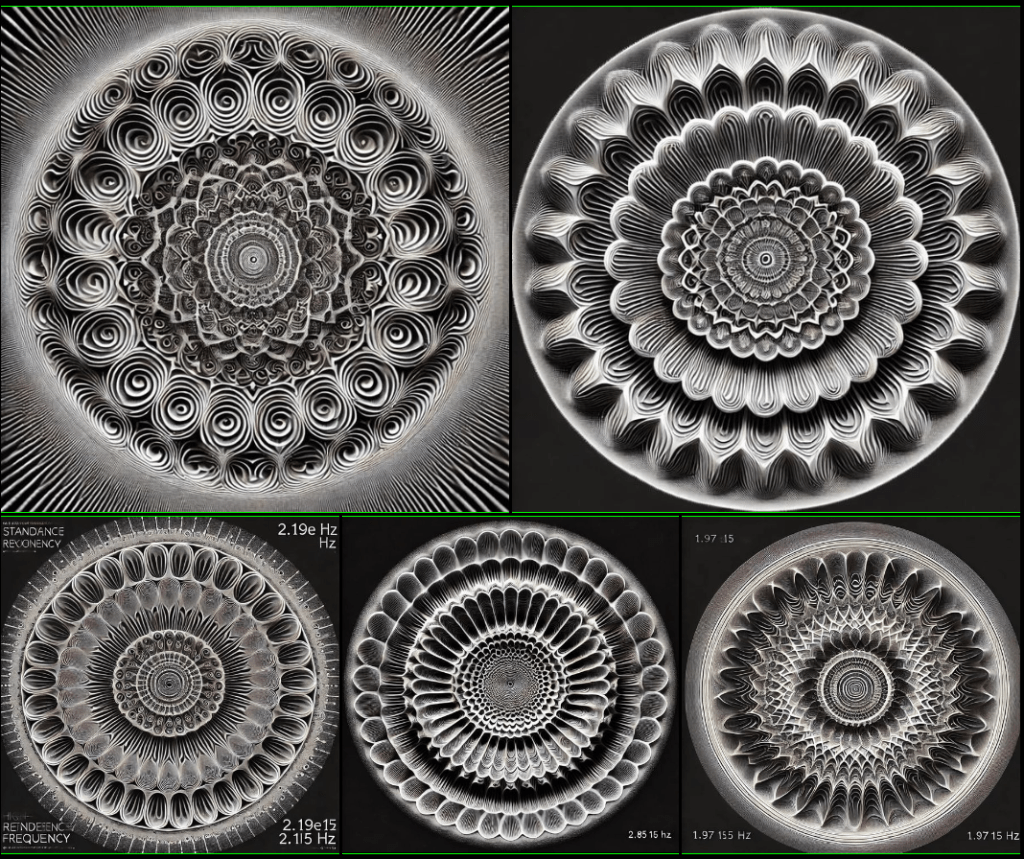
Image 1: Hydrogen
Image 2: Helium
Image 3: Gold
Image 4: Uranium
Image 5: Carbon
1. Introduction
Within the field of Quantum Realism, it is theorized that the observable universe emerges from a quantum network, a fundamental, non-physical processing field that creates physical phenomena as virtual constructs. This hypothesis challenges the classical, materialist view of reality by proposing that the physical world, including space, time, and matter, is the output of underlying quantum information processing and consciousness.
This blog explores the application of quantum resonance theory to simulate and visualize the resonant patterns of atomic elements. Using a resonance equation that incorporates constants and atomic parameters, the method provides a way to represent each element’s unique quantum resonance frequency as a cymatic pattern, a concept derived from the study of wave dynamics and frequency visualization. By examining the resonant behavior of atoms like carbon, we aim to offer a framework that not only visualizes atomic structures but also bridges traditional quantum mechanics and Quantum Realism.
2. Theoretical Framework: Resonant Frequency Equation
The core of this model lies in calculating an element’s resonant frequency based on its atomic properties and universal constants. The formula for resonant frequency is given as:

Each term and factor in this equation ties to fundamental constants and quantum variables, creating a framework that would influence the observed resonant patterns, as follows:
- G: Gravitational constant – Introduces gravitational effects into the resonance calculation.
- E: Energy level – Represents a specific energy state or binding energy related to the atomic structure of each element.
- ℏ: Reduced Planck’s constant – Captures quantum mechanical effects tied to angular momentum and resonance.
- c: Speed of light – Acts as a scaling factor for translating between energy and frequency domains.
- α: Fine-structure constant – This dimensionless constant affects the electromagnetic interactions within atomic structures.
- Z: Atomic number – Representing the charge or nuclear structure of an element.
- σ: Nuclear cross-section – The variable related to the probability of interaction or resonance strength.
- Tμν: Stress-energy tensor – This tensor, drawn from general relativity, is used here to integrate spacetime geometry effects into the frequency model.
- Ω: Resonance constant – A dimensionless coefficient that accounts for fluctuations, suggested to fluctuate due to quantum gravitational effects
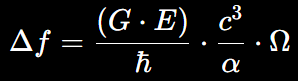
This equation derives a unique frequency Δf that theoretically represents how each element resonates based on its atomic structure and interactions within the quantum field.
2.1 Components of the Resonant Frequency Equation
Each term in the equation is fundamental to understanding how atomic resonance arises from a quantum mechanical and gravitational basis:
Gravitational Constant G:
- G ≈ 6.67430 × 10⁻¹¹m3kg-1s-2. The inclusion of G introduces the influence of gravity into atomic resonance, which under traditional quantum theory, plays a minimal role at atomic scales. However, in Quantum Realism, it suggests that gravity influences atomic structure and resonance.
Energy Level E:
- E represents the nuclear binding energy specific to each element, which is derived from the protons and neutrons within the atomic nucleus. For example, for carbon (with six protons and six neutrons), the nuclear binding energy is approximately 92 MeV, or 1.473 × 10⁻¹¹J.
Reduced Planck’s Constant ℏ:
- ℏ ≈ 1.0545718 × 10⁻³⁴Js. This constant is fundamental to quantum mechanics, connecting energy with frequency and underpinning the oscillatory nature of quantum particles. Its presence in the equation is essential for capturing the probabilistic nature of quantum states.
Speed of Light c:
- c ≈ 3.00 × 10⁸ m/s. The speed of light cubed in this equation acts as a scaling factor that translates quantum state information into a frequency domain.
Fine-Structure Constant α:
- α ≈ 1/137 represents the strength of electromagnetic interaction and affects atomic behavior by influencing electron-photon interactions.
Resonance Constant Ω:
- Ω ≈ 0.42 ±ΔΩ represents a fluctuating coefficient unique to each element, capturing how quantum gravity effects influence atomic resonance. This value reflects quantum fluctuations within spacetime and allows each element’s resonance pattern to have subtle variations due to these quantum-gravitational effects.
2.2 Interpretation of the Resonance Constant Ω and Frequency Δf
The resonance constant Ω represents quantum gravity-induced fluctuations, introducing variability into the resonant frequencies of elements. The resultant frequency Δf thus captures not only an element’s intrinsic resonance but also the fluctuating nature of spacetime. This resonates with Quantum Realism’s framework, where the underlying quantum field gives rise to physical constructs. The resonance model here emphasizes the interplay between quantum properties and gravitational effects in the manifestation of resonance.
3. Simulation of Resonant Cymatic Patterns
Simulating the resonant cymatic patterns of elements using calculated frequencies provides a means of visualizing atomic structures as they might appear when interacting with quantum fields.
3.1 Pattern Formation and Atomic Structure
The frequency Δf drives a cymatic simulation, which uses digital algorithms to model standing wave patterns, nodes (points of zero movement), and antinodes (points of maximum movement). These resonate with the atomic structure of each element, where high-density areas in the image indicate points of intense resonance.
- Standing Wave Patterns: Each frequency produces a unique pattern of nodes and antinodes, where resonance “peaks” (antinodes) signify maximal vibrational energy, while nodes signify points of stability.
- Atomic Number and Symmetry: The atomic number Z determines the pattern’s symmetry. Elements with symmetrical electron configurations (like carbon’s six protons) generate highly symmetrical cymatic patterns.
- Constructive and Destructive Interference: Quantum interference plays a role in pattern formation, where constructive interference amplifies the pattern, and destructive interference reduces intensity, creating a fractal structure in some cases.
3.2 Process of Visualization
The visual representation involves mapping resonance intensity to a digital canvas, where nodes and antinodes create the image:
- Nucleus as a Central Node: The nucleus is represented as a central point, showing the atomic core’s concentrated energy.
- Radial Symmetry and Color Intensity: Symmetry matches the atomic structure, with nodes and antinodes following a radial pattern for elements like carbon, which has sixfold symmetry due to its atomic number.
- Color Mapping Based on Resonance Intensity: Bright colors indicate antinodes with maximum resonance, while darker areas represent nodes.
4. Detailed Visualization for Carbon Atom
Plugging in Values:
Substituting these values into the formula to compute Δf:

This setup gives the resonance frequency Δf, a theoretical quantum resonance characteristic of carbon.
Using the resonance equation, we derive the specific frequency for carbon’s resonance and simulate its cymatic pattern. Carbon, with an atomic number of 6, has six protons, influencing its resonance symmetry:
Calculation of Δf for Carbon:
- The formula is applied with carbon-specific binding energy (92 MeV) and results in a frequency that captures carbon’s unique quantum-gravitational resonance.
Fractal and Interference Patterns:
- The cymatic simulation reveals a fractal-like pattern, with symmetrical nodal waves radiating from the center, creating a resonant signature unique to carbon.
5. Non-Observable Quantum Waves vs. Electromagnetic Waves
The resonant frequencies derived in this model correspond to non-observable quantum waves rather than conventional electromagnetic (EM) waves:
Quantum Waves as Probability Amplitudes:
- Unlike EM waves, which are oscillations in electric and magnetic fields, quantum waves exist as probability amplitudes, representing possible states rather than physical oscillations.
Absence of Observable EM Signature:
- These resonant frequencies are derived from the quantum wave function Ψ, representing probabilistic states rather than fields that interact with the EM spectrum.
Gravitational and Quantum Influence:
- The equation incorporates both gravitational and quantum constants, suggesting these resonances reflect atomic interactions with spacetime rather than with EM fields.
6. Implications in Quantum Realism
Quantum Realism proposes that reality emerges from a quantum field network rather than being fundamentally physical. This resonance model supports that hypothesis, illustrating how elements resonate within a non-physical, quantum field.
Interaction with the Quantum Field:
- The resonance model suggests each element interacts with an underlying field governed by constants that shape reality at the quantum level.
Implications for Atomic Structure and Observation:
- These patterns provide a possible visual representation of atomic structures as influenced by quantum field, hinting at the interconnectedness of quantum phenomena.
- Visualization of Consciousness:
- This model aligns with theories in Quantum Realism that consciousness and matter emerge from the same quantum field, potentially visualized here as atomic resonance.
- We may be glimpsing into the architecture of the quantum realm and the architecture of consciousness itself.
Closing Remarks
The exploration of quantum resonance patterns and cymatic visualizations of atomic elements brings us closer to understanding atomic structures. Within the framework of Quantum Realism, this study offers a unique perspective on how resonance frequencies shaped by quantum and gravitational constants can visually manifest as intricate, symmetrical patterns. These cymatic representations of atoms reveal a hidden layer of complexity, suggesting that the observed reality is not merely physical but a manifestation of an underlying quantum processing field.
This approach also invites us to contemplate the role of consciousness within this quantum framework. Quantum Realism proposes that consciousness is as fundamental to the universe as space and time, suggesting that it emerges not as a byproduct of brain activity but as an integral part of the quantum field itself. The resonance patterns visualized in this study may represent more than just atomic structures; they could reflect a deeper interaction between consciousness and the quantum realm. Just as cymatic patterns arise from specific frequencies, consciousness might interact with these quantum resonances, playing a role in the “collapse” of quantum states into observable phenomena.
In this view, consciousness is not merely an observer of reality but an active participant within the quantum field network, influencing the way resonance manifests in physical structures. This perspective aligns with the idea that consciousness and reality are intertwined, with each element’s unique resonant frequency potentially serving as a bridge between the physical and the experiential. Future research could further investigate how quantum resonance patterns relate to conscious observation, potentially leading to new insights into the nature of reality and the fundamental role consciousness plays within it.
By visualizing atomic resonance as cymatic patterns, we are not only glimpsing at the architecture of the quantum realm but perhaps touching upon the architecture of consciousness itself, a fabric that underlies all of existence.
Hydrogen
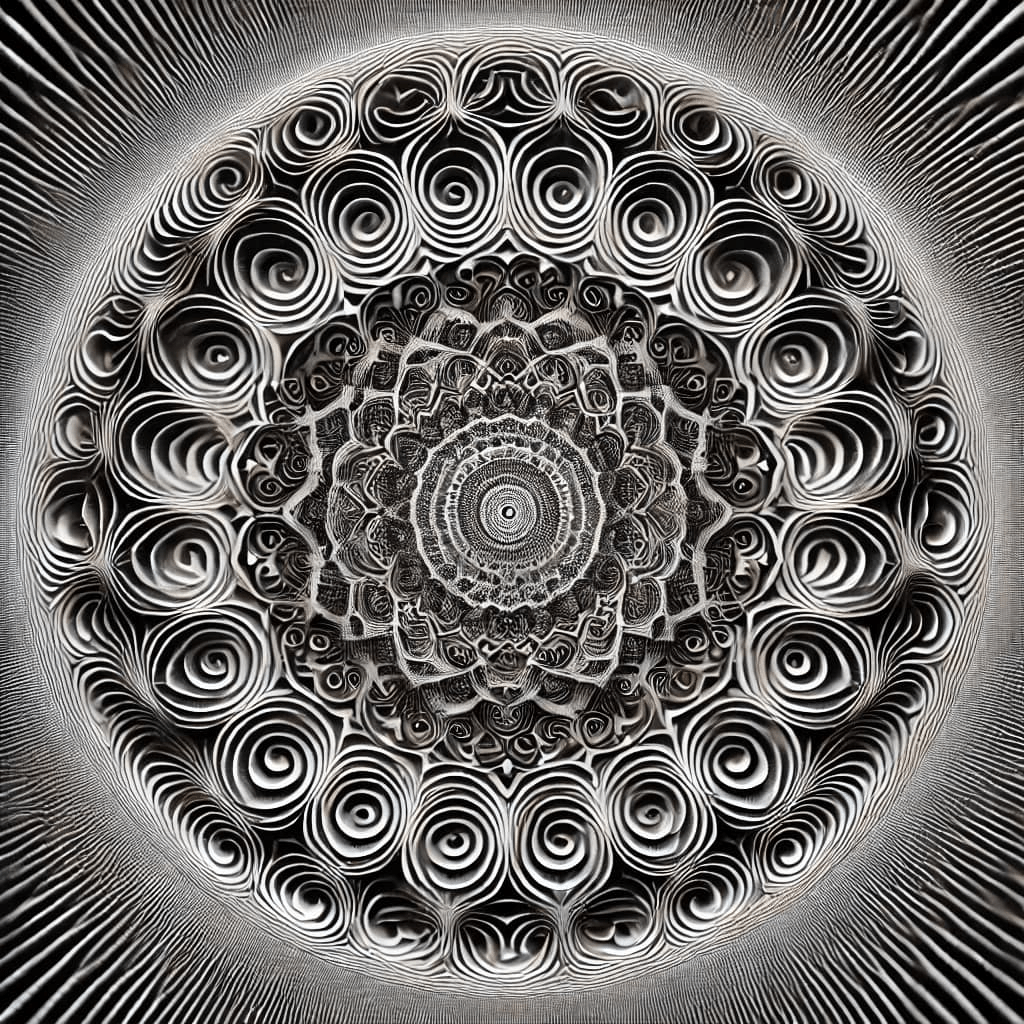
Helium
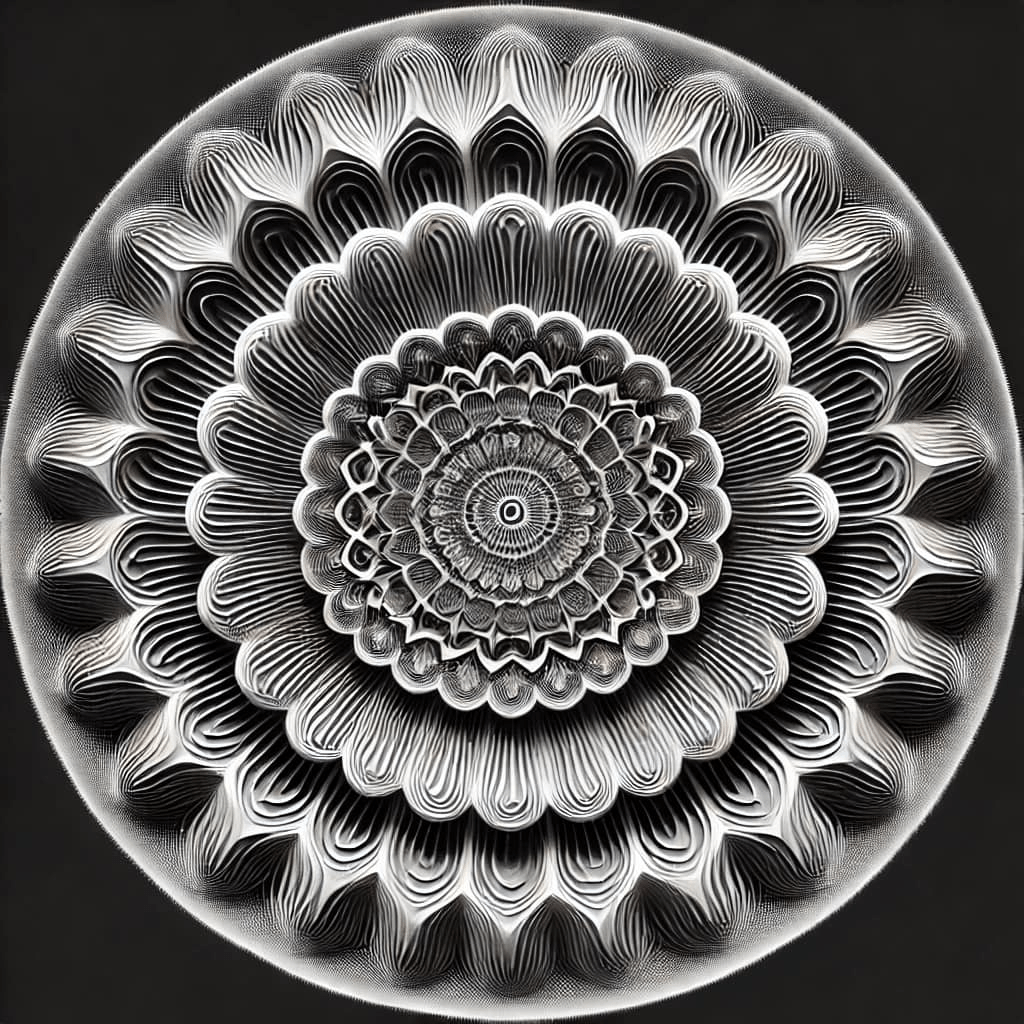
Carbon
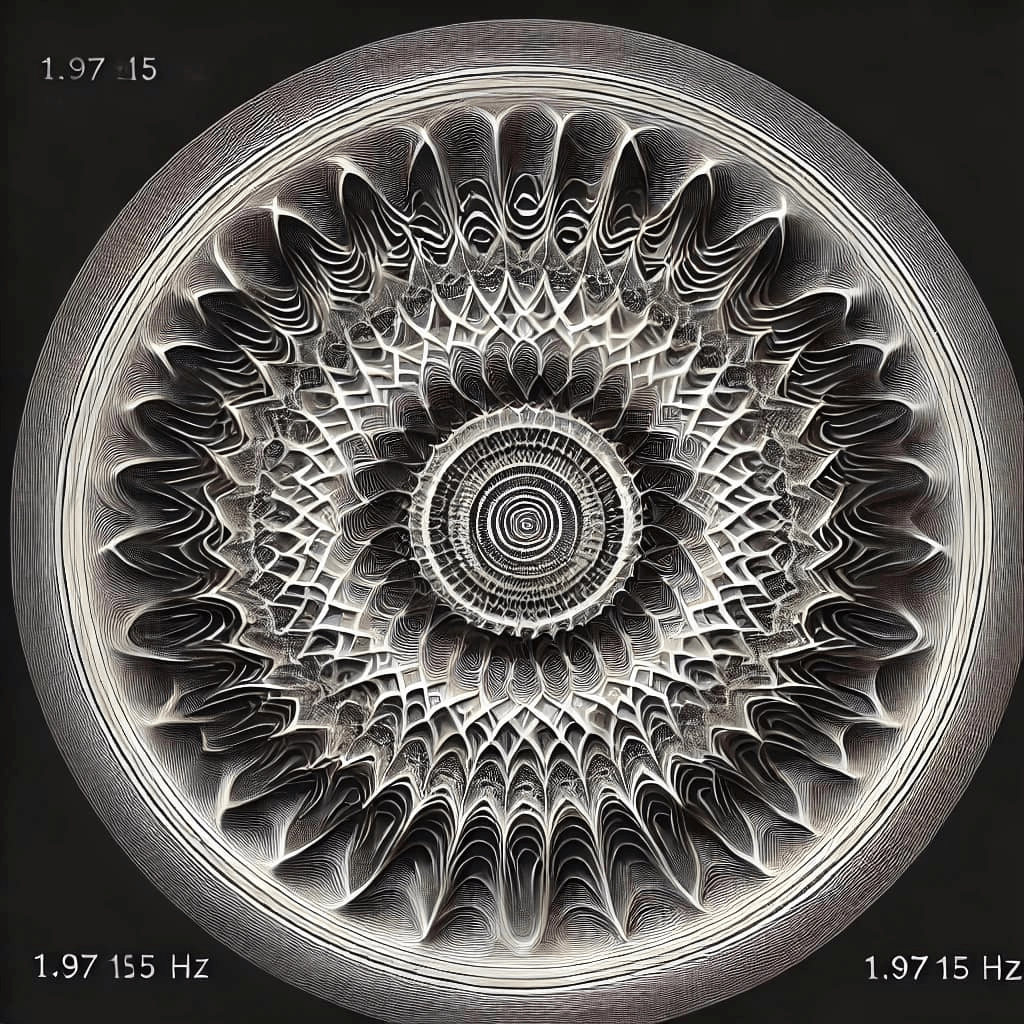
Gold
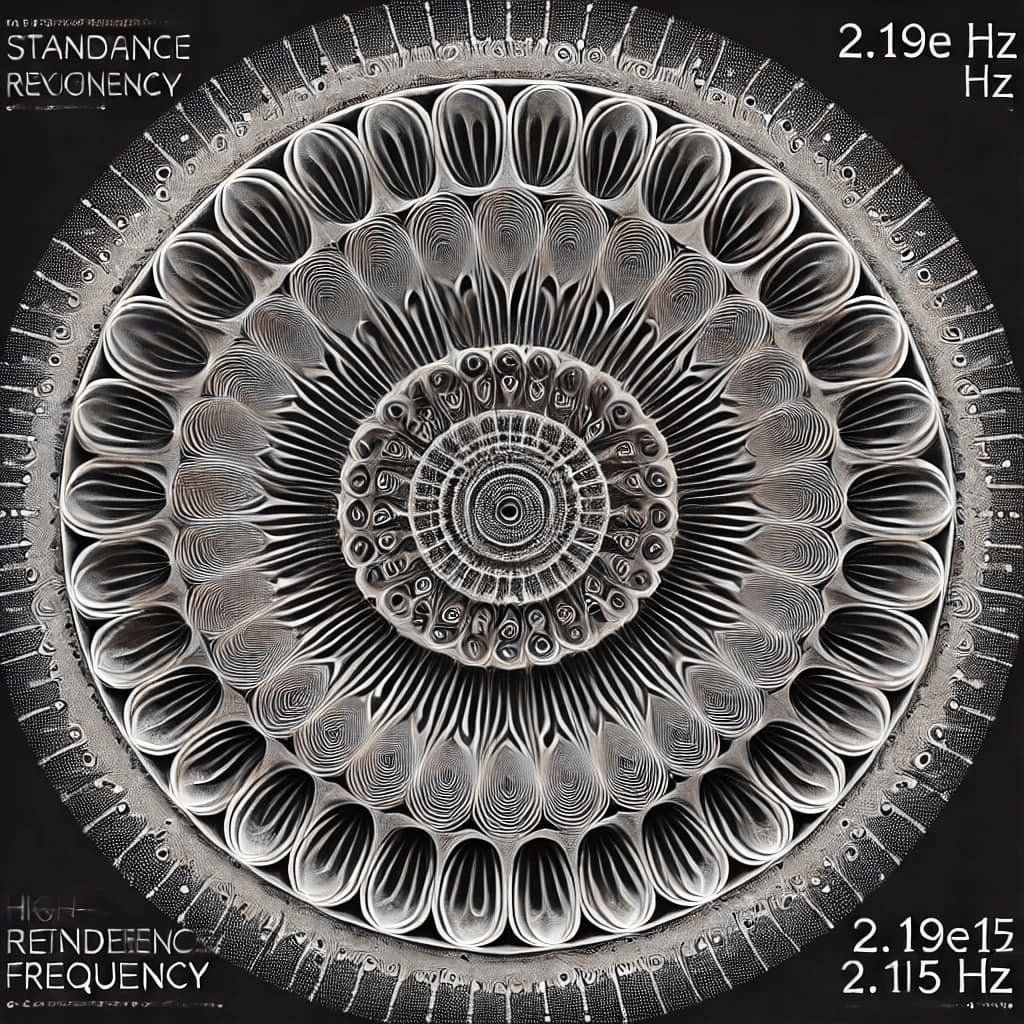
Uranium
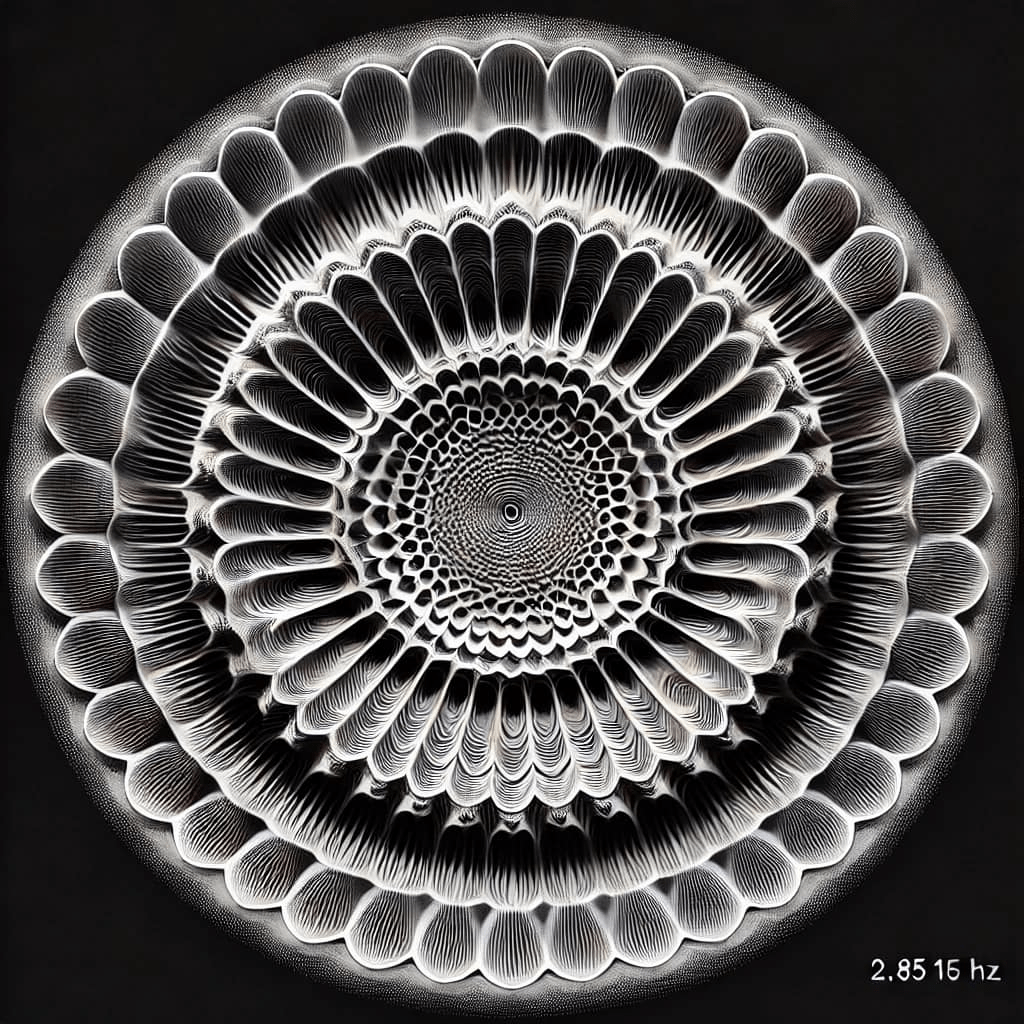


 Bantam Joe
Leave a comment