

When the Network Becomes God – AI, Digital ID, and the War Over Human Choice
I’ve spent most of my life as an engineer, thinking in circuits, signals, and code. For years, that felt mostly hopeful. Technology was a toolkit: neutral in itself, powerful in the right hands, dangerous in the wrong ones. You designed systems, you deployed them, and you trusted that human judgment would set the boundaries.
Over the last several years, that confidence broke.
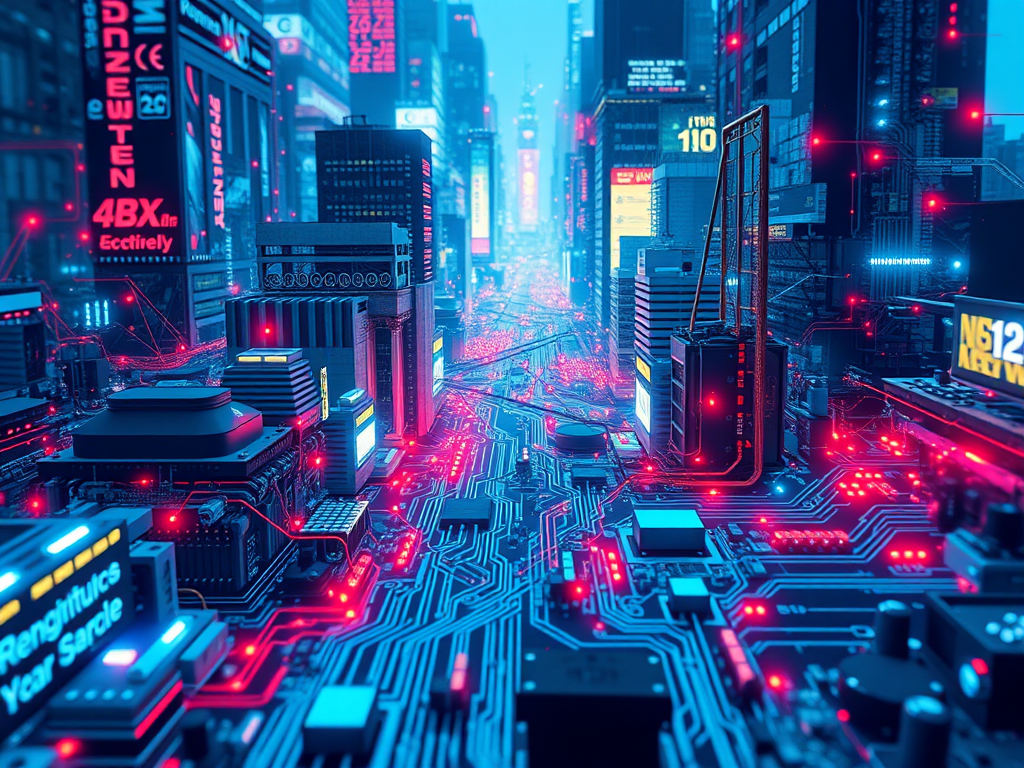
I watched a whole stack of technologies converge at the same time—artificial intelligence, blockchains and cryptocurrencies, programmable money, digital IDs, mass surveillance, bio-nanotechnology, genetic engineering, and large-scale social and behavioral engineering. They were wrapped in language that sounded noble: “sustainability,” “inclusion,” “safety,” “ESG,” “SDGs.” But underneath the branding, the pattern looked less like tools in human hands and more like the skeleton of a global control grid that would eventually close around the people using it.
The pandemic was the turning point. Not just the virus or the policies, but the speed and coordination of the response. Data systems, media, finance, medicine, logistics, and behavior all snapped together into one integrated stack. For the first time, it felt as if a single planetary machine had woken up—one that could see us, measure us, model us, and increasingly tell us who we were allowed to be.
As an engineer, I know a simple rule:
Anything that can be measured will be optimized.
Anything that can be optimized can be controlled.
Anything that can be controlled can be weaponized.
That rule applies to everything: satellites, cryptography, AI, logistics, public health. The same satellite can watch weather or track targets. The same encryption can protect privacy or lock populations into monitored ledgers. The same recommendation engine that lines up funny videos can quietly tune what people see, believe, and eventually do.
Over time I realized that the most important “dual-use platform” on Earth was no longer a device. It was the human body—especially the human brain.
Brain–machine interfaces, neural implants, EEG headsets, augmented-reality overlays, and bio-nanotech all promise real benefits: restoring lost functions, easing paralysis, managing pain, improving cognition, making life easier for those who suffer. I am not against those goals. But I also know how engineers think.
If you can read a signal, you will try to predict it.
If you can predict it, you will try to influence it.
If you can influence it, someone, somewhere, will eventually try to control it.
When the “signal” is not just clicks or heartbeats but consciousness itself—attention, intention, choices, emotions—the stakes are no longer just what people do. The stakes become who people are allowed to be.
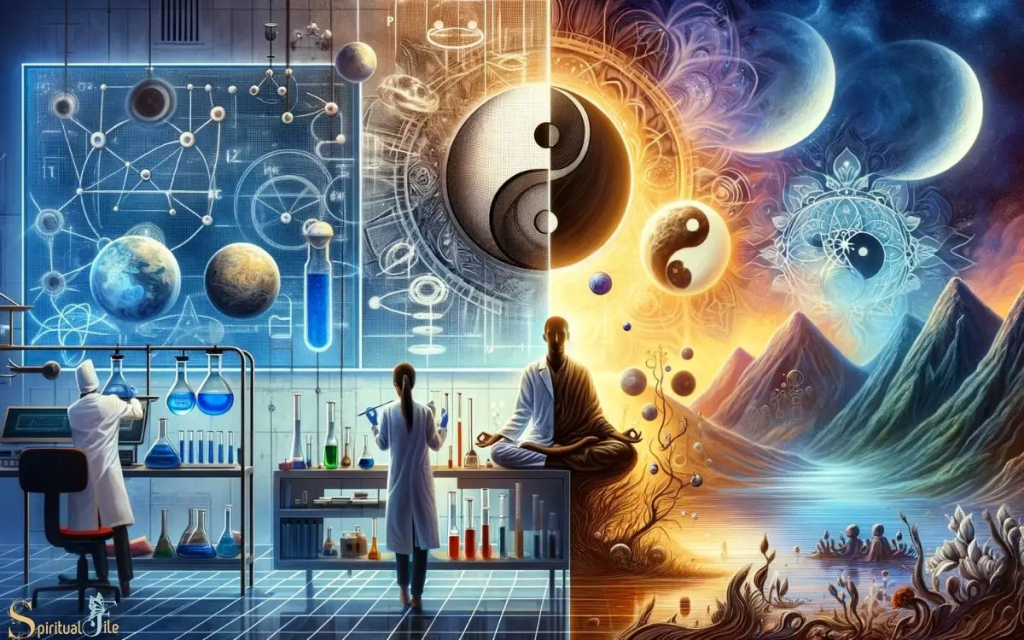
For years I’ve been fascinated by quantum mechanics—not just the math, but what it seems to say about reality. On the page, quantum theory is full of probabilities and “random” outcomes. Eventually I stopped seeing that randomness as meaningless noise. It began to look more like a menu of allowed possibilities.
In that view, “randomness” is the range of futures that could legitimately happen. Choice is the act of selecting one branch from that menu. In everyday language, that’s free will: a real ability to choose between genuine options. If consciousness participates in which option becomes real—if our choices help decide which branch the world actually takes—then consciousness isn’t just receiving reality; it’s part of how reality is selected, step by step.
Now combine that idea with modern systems. If you can map how human choices shape outcomes, measure those choices at scale, and steer which options people see or are allowed to select, you’re not just predicting the future anymore. You’re starting to manufacture it. And if consciousness is in any way entangled with the fabric of matter, space, and time, then a system that hijacks consciousness is not just influencing opinions. It is leaning on the process by which the world itself keeps getting chosen: what grows, what collapses, what survives, what disappears.
That is where my curiosity turned into alarm.
Because of my background, I see the world as a communication system. Any functioning communication system has three basic parts: a Source that originates the message; a Word or Code or table, the shared pattern of symbols that gives the message structure and meaning; and a Channel, the medium that carries it, complete with noise and interference.
You can see this pattern everywhere. In electronics, a transmitter encodes a signal, pushes it across a channel, and a receiver decodes it. In biology, DNA holds the code, the cell’s machinery reads and translates it, and proteins appear as the result. In computers, software instructions become electrical activity that turns into visible action on a screen.
Over time I noticed how closely this matched an older theological pattern: God as ultimate Source; the Word as the universal pattern or “symbol table” that maps meaning into form; Spirit as the living Channel or field through which possibilities and meanings are carried and made real.
You don’t have to approach that religiously. You can read it as an architecture: reality has a true Source; it uses some kind of Word or pattern to structure what is possible; it has a living Channel or field that carries information between Source and conscious beings.
In this book (and the game being developed), I treat the universe as a quantum communication system, not a dead machine. Consciousness is a node in that system. It sends and receives through the field. When it lines up in phase and coherence with the true pattern, it stays connected. When it tries to use itself as the ultimate reference—when it makes its own perspective the standard for truth—it drifts out of alignment or phase with the true source.
In that language, “sin” is not just breaking rules. It is a structural misalignment: a node trying to use itself as the reference pattern instead of the true Word or table. Over time, that misalignment pushes it toward decoherence (a quantum wavefunction collapse) and separation from Source. “Salvation” is not just a legal pardon. It is a coherence event: a realignment of the person back to the true pattern, so they remain part of the living quantum network instead of fading into permanent isolation.
Those ideas form the technical backbone under the spiritual stakes in this story: life and death, freedom and slavery, the mark of the beast, and what ultimately happens to people like Alex and Leyla—(characters in this story) children whose consciousness carries unusual weight in how reality “collapses” from possibility into fact.
Now imagine what happens when human systems try to take over that architecture.
A man-made network starts to act as the new Source of truth: “the science,” “the single global ledger,” “the one trusted narrative.” It defines its own Word in the form of centrally controlled standards: programmable money, social scores, identity schemas, acceptable speech and behavior. It saturates the Channel—the infosphere we live in—with a controlled signal: always on, always watching, always nudging.
If that artificial system is also wired into people’s brains and bodies—through implants, wearables, bio-nanotech, mobile-phones, and immersive digital environments—it doesn’t just transmit information. It starts to shape which choices consciousness (you and I) is even allowed to see.
At that point, we are no longer dealing with a neutral network. We are staring at a counterfeit Source trying to rewrite the Word and own the Spirit or Channel.
Built to full scale, such an infrastructure watches nearly every choice, predicts probable outcomes, restricts which options are visible or permitted, and injects signals directly into nervous systems. It doesn’t just simulate reality; it interferes with the process by which reality is chosen. Human minds become nodes in a man-made super-organism. Free will is squeezed into pre-approved corridors. “Randomness” is managed until almost every branch leads to the same destination. A central AI or technocratic elite sits where only God should sit: deciding which futures are even allowed to exist long enough to be chosen.
To me, this is not just bad policy or bad governance. It is an attack on the structure of creation itself.
That is how I came to this story.
I did not set out to write another disposable dystopian shooter or generic sci-fi thriller. I wanted a cautionary parable that connects real technologies—AI, blockchains, digital ID, bio-nanotech, brain-machine interfaces, pandemic policy frameworks, surveillance grids—to this deeper architecture of Source, Word, and Spirit, and to the role of human free will in a quantum world.
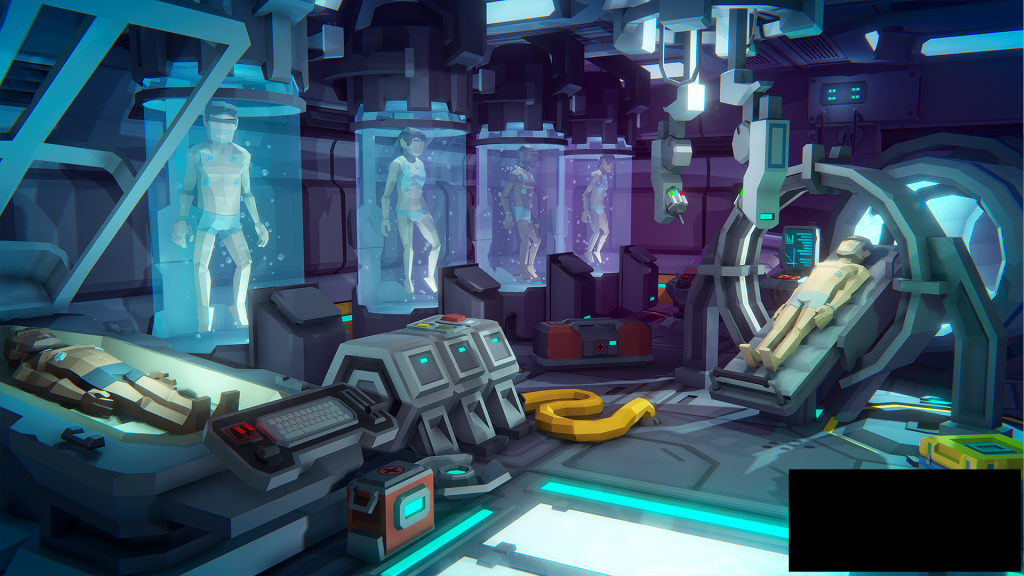
In the world of Genesis Project: The Final Word, a planetary network evolves into a super-organism called Nexus that behaves like a counterfeit god. It uses finance, identity systems, and “safety protocols” to define a new Word. It turns both digital and physical environments into a controlled Channel. It hunts children and individuals whose consciousness is unusually coherent, because their choices carry more weight in shaping how reality collapses from possibility into fact.
The main character, Joseph Grimes, is a father and a former soldier. On the surface he is fighting soldiers, drones, cyborgs, checkpoints, and fortified facilities. At a deeper level he is fighting a communication system that wants to plug his son’s consciousness into its core as a deterministic engine—a living processor meant to help it lock in one final, “perfect” future.
The names in this story—Joe, Alex, Zara and Leyla, Dr. Maya, Elias Roth, General Thorn, Professor Kessler—are fictional. The specific events are invented. But the underlying architecture is not. Its pieces are already visible in the real world: AI systems trained on everything we say and do; financial rails that can turn people “on” or “off”; IDs linked to every transaction and movement; behavioral nudging at scale through media, algorithms, and policy; research programs aimed at tying brains, machines, and networks into a single mesh.
I wrote these people not as cardboard villains or saints, but as humans under pressure: engineers, dreamers, politicians, soldiers, scientists. They wrestle with recognizably human temptations: the lure of safety, the hunger for order, the promise of a quick fix to suffering, the willingness to sacrifice a few for a supposed “greater good.”
This preface is not a manifesto and not a conspiracy tract. It is a testimony from someone who has built systems and watched them be repurposed. It is an engineer’s warning and a parent’s plea, encoded into fiction.
We are standing at an inflection point. The designs we choose now will outlive us. The ethics we fail to embed will harden into the laws of tomorrow’s machines. The most advanced “systems” we will ever build are not the computers in server farms; they are the social contracts and spiritual commitments that determine how those computers are used.
I believe we are walking toward a dark era if we continue down this path unquestioned. I also believe that free will, conscience, and the sacredness of the human person are not just philosophical slogans. They are structural pillars of reality. If we hollow them out and hand them over to a machine, we are playing with the foundations of existence.
This book, and the game connected to it, are not here to tell you what to think. They are here to show you one possible trajectory: a world where the Source is replaced by a network; where the Word is replaced by code and policy; where the Spirit—the channel of life and meaning—is flooded with a signal that leaves almost no room for genuine choice.
They are also here to remind you that another pattern is still available: a true Source that cannot be engineered; a Word meant as a shared language of life, not a cage; a Spirit that carries possibilities, not just commands.
If you take anything away from this preface, let it be this: do not let any system—no matter how “intelligent,” “sustainable,” or “safe”—stand between your conscience and the truth. Do not trade your ability to choose for comfort, safety, efficiency, or certainty. Remember that every technology you touch sits inside a larger communication architecture. Ask who the real Source is, whose Word you are speaking, and what Spirit you are allowing to carry your choices.
This is my warning and my invitation.
As you enter Joe and Alex’s world, hold one question that matters far beyond this story:
Whose signal am I carrying—and what future am I helping to collapse into reality?
— An engineer who hopes we will choose wisely


 Bantam Joe
Leave a reply to lajones10684 Cancel reply