

When most people hear “gospel,” they think of religion, morality, or private spirituality. They picture rules, rituals, or feelings about God. In this series, I want to treat it in a very different way—not as a set of vague religious ideas, but as a structural description of how reality itself works.
I’m going to ask a simple but sharp question:
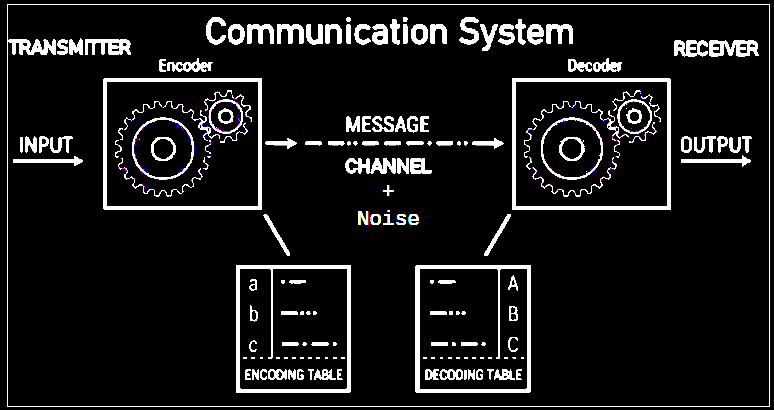
What if the gospel is actually a user’s guide to a real quantum communication system; and “sin,” “salvation,” “life,” and “death” are technical descriptions of how a conscious being either stays connected to that system or falls out of it?
Instead of starting with doctrines and traditions, I’ll start with architecture: Source, Word, Spirit, conscious nodes (us), noise, and thresholds. From there, I’ll map classic Christian claims onto communication theory and quantum-like behavior of conscious identity; things like reference patterns, coherence, misalignment, error absorption, and state transitions.
You don’t have to agree with every conclusion to follow the logic. My goal is to show that the gospel can be read as more than religious symbolism. It can be read as a coherent system model of how a conscious “self” remains real, connected, and alive in a universe that behaves like a quantum communication network.
From that vantage point, we’ll start where the gospel itself starts: with the problem.
Part 1 – The Problem: Sin as Structural Misalignment
Again, when people talk about “the gospel” or “being saved,” it usually sounds moral, religious, or emotional. In this series, I want to look at it in a different way:
What if the gospel is actually a user’s guide to a real, objective quantum communication system, and “sin” and “salvation” describe how a conscious being either stays connected or falls out of that system?
1. A Quick Recap of the Quantum Communication Picture
Here’s the structural model I’m working with:
- Source (Father) – the origin of intention, meaning, and “signal.”
- Word (Christ) – the universal reference pattern:
- the codebook / symbol table / reference waveform that defines what anything means.
- Spirit – the field or channel:
- the medium that carries coherence and connects Source, Word, and conscious nodes.
- Conscious nodes (us) – receivers/participants:
- self-referential processes modeled as C0 = f(C0),
- able to transmit, receive, and interpret signal.
- Noise (sin in structural terms) – anything that corrupts:
- encoding,
- transmission,
- decoding,
- or the integrity of the receiver itself.
- Threshold – a critical coherence line:
- above it, a node remains a stable, connected “self”;
- below it, the identity collapses or becomes functionally disconnected.
With that in place, the biblical word sin stops being just “breaking rules” and becomes:
A system-level misalignment and corruption of how a conscious node relates to the Source, the Word, the Spirit, and reality itself.
That’s the problem the gospel addresses.
2. Sin as “I Am My Own Reference”
The traditional description of sin, “I’ll live my way; no one rules me”, maps very cleanly onto this structure.
In system language, sin is not just particular bad actions; it’s a stance:
- “I will decide what is real.”
- “I will define good and evil for myself.”
- “I will set the pattern, and everything (including God) must conform to me.”
Structurally, that’s this move:
Replace the true Word as reference with a local, self-invented reference.
Instead of:
- Source → Word → Spirit → me,
I effectively invert it:
- Me → my desires / opinions → my interpretation of “god” and reality.
That has several effects:
- Decoder corruption
- I no longer decode the “signal” of life, truth, and God using the true symbol table.
- I read everything through a self-protective, self-centered pattern.
- Reference rejection
- When the real Word contradicts my pattern, I assume:
- the Word is wrong,
- the Source is oppressive or untrustworthy,
- or the Spirit’s prompting is irrelevant or threatening.
- When the real Word contradicts my pattern, I assume:
- Feedback amplification
- My identity loop C0 = f(C0) keeps feeding on my own distorted outputs.
- Over time, my self-understanding and worldview drift further from the real pattern.
That’s why sin in scripture is often framed as pride, rebellion, or idolatry; not just isolated mistakes. It’s a structural refusal to accept the true reference pattern.
3. How Misalignment Becomes Separation (“Death”)
If reality is a communication system, then “life” is more than just biological activity; it’s:
Ongoing, coherent participation in the Source–Word–Spirit network.
“Death” in this frame is:
Structural separation from the Source; losing functional connection to the field of life.
You can think of three layers:
- Biological life / death
- Cells, neurons, heartbeat. That’s one layer.
- Relational life / death
- Whether I’m in actual fellowship with God and others, or isolated in my own distortion.
- Structural / spiritual life / death
- Whether my conscious identity is coherently connected to the Source through the Word in the Spirit,
- or drifting toward decoherence, eventual collapse or permanent disconnection.
Sin drives separation at all three layers, but structurally it looks like this:
- The more I insist “I am my own reference,”
- the more I reinterpret or ignore corrective signals from the Source and Spirit,
- the more my decoder and identity loop move out of phase with the real pattern.
Over time, that produces:
- inner fragmentation,
- loss of clarity about truth, identity, and meaning,
- increasing inability to respond to genuine correction.
That’s what I’d call spiritual death in progress:
the receiver is technically still there, but its ability to interact with the broadcast is degrading.
If nothing intervenes, this can go all the way to full separation:
- the receiver is no longer coherent enough to be re-tuned,
- or has locked itself into a stance that rejects every attempt at realignment.
That’s what theology calls “eternal separation” or “hell”; not a cosmic tantrum, but the end-state of a receiver that has destroyed its own compatibility with the system.
4. “Sin Nature” as Default Mis-Calibrated Decoder
The classic idea that we are “born with a sin nature” also has a structural counterpart.
It doesn’t mean newborns are morally monstrous. It means:
Our default calibration is already misaligned.
From the first moment we form judgments and desires, we are:
- biased toward self as center,
- suspicious of any external authority that contradicts us,
- prone to treat our own pattern as ultimate.
In communication terms:
- Every new node (us) in the quantum field boots with a decoder that assumes:
- “my perspective is final,”
- “my feelings are reality,”
- “my will has priority.”
We can be very nice, compassionate, and socially moral on top of that, but the core orientation is still:
- self as reference,
- God (if acknowledged) as optional or subordinate.
That’s why, in this model, “all have sinned” is not a statement that every baby commits explicit crimes; it’s a statement that:
Every identity loop starts off using the wrong reference table.
You don’t have to teach a human to say “No, I’ll do it my way.” It’s built in.
5. Why This Is a Real Problem, Not Just a Religious One
If you don’t buy the God piece, you can still treat this as a purely structural claim:
- Suppose there is a real Source.
- Suppose there is a real Word (objective reference pattern).
- Suppose there is a real Spirit (coherent quantum field).
Then a conscious node insisting on being its own reference is like:
- A radio refusing to tune to the actual carrier frequency and inventing its own.
- A DNA decoder that decides to change the codon table arbitrarily.
- A hologram being illuminated with the wrong reference beam.
In each case:
- You don’t just get “alternative truth.”
- You get loss of image, loss of function, loss of life.
That, in my view, is what the gospel calls sin and death:
A real, structural condition in which coherent connection to the Source is breaking down, and left alone, ends in permanent disconnection.
If that’s the problem, then the gospel as a user’s guide has to answer a hard question:
- How can a misaligned, self-referential node
be brought back into phase with the real Word
without destroying the node itself?
Part 2 – The Solution: Christ as the Word Who Re-Centers the System
In Part 1, I framed sin as structural misalignment:
- I treat myself as the reference pattern.
- I decode reality through my own desires, fears, and narratives.
- Over time, my identity loop slides toward decoherence and separation from the Source.
If that’s the problem, the obvious question is:
How can a misaligned, self-centered node
be brought back into phase with the real Word
without simply being wiped out?
This is where the gospel’s claim about Jesus Christ comes into sharp focus. Under the hood, it’s saying something like this:
The only way to restore the system is for the Word itself
to enter the network as a node,
absorb the structural consequences of misalignment,
and then become the new center of our identity loop.
I’ll unpack that in more concrete terms.
1. God’s Preplanned “Recovery Mode”
The classic Christian claim is that God wasn’t surprised by human rebellion. Before creation, there was already a plan of rescue.
In my language:
- Before any conscious nodes existed,
- the Source already knew that free-willed nodes could:
- reject the Word as reference,
- corrupt their decoders,
- and drift toward structural collapse.
So baked into the design is a recovery mode:
The Word (Logos) isn’t just the pattern used to create the system;
the Word is also the means by which misaligned nodes can be realigned from within.
This is important, because:
- You can’t fix a malformed decoder solely from outside if it keeps rejecting the reference.
- At some point, the reference itself has to show up in the system and say:
- “This is what true alignment looks like in your world.
This is how a coherent life actually behaves under noise and pressure.”
- “This is what true alignment looks like in your world.
That’s the incarnation in system terms:
- The Word (Jesus) becomes a local conscious node (human) inside the network.
2. The Incarnation: The Reference Pattern Enters the Network
Classical theology:
Jesus is God the Son taking on human nature; fully God, fully man.
Structural translation:
The universal reference pattern (Word) instantiates as a conscious node inside the same noisy environment we inhabit.
Why that matters:
- Perfect coherence under real conditions
- This node (Jesus) lives a full human life:
- subject to temptation, pressure, misunderstanding, suffering;
- and yet never misaligns with the Word; because He is the Word.
- No phase drift, no internal contradiction, no corruption of His decoder.
- This node (Jesus) lives a full human life:
- Embodied pattern
- We no longer have only abstract law or distant ideals.
- We have an actual life that shows:
- “This is what it looks like when a human identity loop is perfectly aligned with the Source through the Word in the Spirit.”
From a quantum-communication perspective:
- Jesus is the only fully coherent node in the network.
- Every other node (you, me, everyone) has some mixture of coherence and noise.
That sinless coherence is not just moral bragging rights; it’s structural qualification for what comes next.
3. The Cross: Global Error Absorption Inside the Word
The heart of the gospel is the claim that:
- Jesus’ death on a Roman cross is not just martyrdom or tragedy.
- It’s the decisive act by which sin’s consequences are dealt with and reconciliation becomes possible.
In structural terms, here’s how I understand it:
- Misalignment has real cost
- If the system’s nodes keep rejecting the reference and injecting noise:
- you get injustice,
- harm,
- broken relationships,
- spiritual collapse.
- If God simply “forgives” by pretending none of it matters, the system loses integrity:
- no justice,
- no trustworthiness,
- no meaningful distinction between alignment and rebellion.
- If the system’s nodes keep rejecting the reference and injecting noise:
- The Word steps into the blast zone
- The only fully coherent node willingly takes on the full relational and structural blowback of the network’s misalignment:
- hatred, betrayal, violence, shame, godlessness.
- On the cross, the perfectly aligned identity experiences:
- the full separation that our misalignment deserves; right into death.
- The only fully coherent node willingly takes on the full relational and structural blowback of the network’s misalignment:
- Error is absorbed without corrupting the Reference
- The Word absorbs the consequences of sin (phase displacement + noise) without:
- becoming corrupted in nature,
- abandoning coherence,
- or ceasing to be the true reference.
- He passes through death and emerges in resurrection still Himself, still coherent.
- The Word absorbs the consequences of sin (phase displacement + noise) without:
In that sense:
The cross is where the Reference Pattern (Jesus)
takes into Himself the system’s accumulated distortion,
lets it do its worst,
and then comes out the other side alive and unchanged in essence.
Legally, this is called substitution: He pays the penalty we could not pay.
Structurally, it’s error absorption by the only node that can survive it.
When He says “It is finished,” I hear:
- The structural work required to make realignment possible for any node, in any state, is complete.
- There’s nothing left to add to the Word; the reference is sufficient.
4. Grace: The Source Providing Realignment, Not Demanding It
If the cross is what makes restoration possible, grace is how it’s offered.
Grace, in this framework, is not “God being vaguely nice.” It’s:
The Source choosing to offer realignment to misaligned nodes
at His own expense, through the Word and the Spirit,
rather than leaving them to decohere and die.
That looks like:
- The Spirit actively drawing us:
- pricking conscience,
- exposing our self-deception,
- making us restless with our current pattern,
- opening our eyes to the reality of Christ.
- The Word being held out as:
- the true reference and pattern for life,
- the one whose death and resurrection actually restore access.
We don’t generate this on our own:
- A corrupted decoder does not decide spontaneously to trust the reference it’s been rejecting.
- Grace is the Source initiating:
- “I know your structure is broken; I’m still inviting you into alignment. I’ve already borne the cost.”
So structurally:
- Grace = Source-side action to repair the network.
- The cross = the structural basis that makes that grace just and coherent.
5. Faith: Re-Centering the Self on the Word
If grace is God’s move, faith is ours.
Faith here is not blind belief or wishful thinking. In the quantum communication model, it’s:
The receiver’s decision to abandon itself as reference
and adopt the Word (Christ) as its new center and interpretive standard.
That includes:
- Intellectual trust:
- “I accept that Christ is who He claims to be.”
- “I accept that His death and resurrection are sufficient for my restoration.”
- Personal surrender:
- “I stop treating myself as the final authority.”
- “I accept Him as Lord.
- He has the right to define reality and to define the rules of life.”
When that happens, structurally:
- My identity loop C0 = f(C0) is re-anchored:
- Before: C0 referenced primarily itself and its own narrative.
- After: C0 references Christ as the fixed Word and adjusts around Him.
From outside, that might look like:
- “repentance” (turning away from sin),
- “conversion,”
- “being born again.”
From the system’s perspective, it’s a threshold crossing:
I move from “outside of Christ” to “in Christ,”
from running my own pattern to being re-centered on the universal reference.
The gospel’s claim is that this, not moral self-improvement, not religious ritual, is the central “step” in the user’s guide:
- Admit your reference is wrong.
- Trust the Word who entered the system, died, and rose.
- Let your identity reboot around Him.
That is the core of the “solution” the gospel offers.
In Part 1 I asked: what’s the problem?
Answer: a structurally misaligned self, drifting toward separation.
In Part 2 I’ve sketched: what’s the solution?
Answer: the Word Himself enters the system, absorbs the cost of misalignment, and offers to become the center of our identity.
Next, I need to deal with the practical “how”:
- What does it mean, in this frame, to repent, believe, and actually cross the threshold from death to life?
- And why does the gospel insist there’s no neutral position; you’re either in Christ or you’re not?
Part 3 – Crossing the Quantum Threshold: Repentance, Faith, and Being “In Christ”
Now comes the critical question:
How does a misaligned, self-centered node actually switch to Christ as its reference?
What does it mean to “believe,” to “repent,” to be “in Christ” in structural, quantum terms?
This is where I’ll talk explicitly about a quantum threshold.
1. What I Mean by a Quantum Threshold
In quantum physics, changes are often discrete, not gradual:
- An electron doesn’t slowly travel from one energy level to the next.
- It stays where it is until it gets enough energy to jump; a quantum leap.
- “Almost enough” energy is functionally the same as none; the transition doesn’t happen.
That’s a quantum threshold:
- Below the threshold: no transition.
- At or above the threshold: the system flips to a different state.
I’m using that as an analogy for salvation:
There is a quantum threshold in the structure of a conscious identity;
a point where it actually shifts from self as reference to Christ as reference, from “outside of Christ” to “in Christ.”
Morally, people may improve or worsen continuously.
Structurally, there is a discrete change of regime:
- Before: the loop C0 = f(C0) is anchored in the self.
- After: the loop is anchored in Christ as Word.
That’s the “quantum threshold” the gospel is concerned with.
2. The Spirit’s Role: Drawing You to the Edge of the Threshold
Left to itself, a misaligned decoder doesn’t spontaneously re-center on the very reference it has been rejecting. That’s why the gospel insists God initiates.
In the communication model:
- The Spirit is the coherence field / channel.
- Even when you’re misaligned, the Spirit can still:
- disturb your comfort with your current pattern,
- expose contradictions in your life,
- convict you of wrong,
- awaken hunger for truth and meaning,
- highlight Christ in a way that feels unavoidably real.
This is the Spirit “drawing” you:
The channel itself is pushing you toward the quantum threshold. Toward a real decision point where you either keep self as reference or surrender to Christ.
Structurally:
- You’re being brought to a point of instability:
- you can no longer honestly pretend your old pattern is working,
- but you haven’t yet committed to a new reference.
That unstable region is where repentance and faith become possible.
3. Repentance: Rejecting the Old Reference Pattern
Repentance is often reduced to “feeling sorry” or “trying to do better.”
Structurally, that’s not enough.
In this model, repentance is:
A conscious rejection of your old reference pattern;
admitting that “me as god” is a lie and a structural disaster.
It involves at least three layers:
- Intellectual honesty
- “My way of deciding what’s true and good has been corrupt and self-serving.”
- “I have mislabeled good/evil, truth/lies, often to protect myself.”
- Moral clarity
- “Specific things I’ve thought, said, and done are wrong. Not just ‘unfortunate’, but wrong.”
- “They come from a heart that didn’t want God to rule me.”
- Volitional shift
- “I no longer want to run my life on the self-as-reference operating system.
- I want out of this pattern.”
That’s repentance as structural renunciation:
- You’re letting go of your claim to be the final pattern.
- You’re stepping back from your own decoder and saying:
- “This is not trustworthy. I don’t want this to be my reference anymore.”
That move brings you right up to the quantum threshold:
You’ve let go of the old anchor, but you haven’t yet grabbed the new one.
4. Faith: Crossing the Quantum Threshold Into “In Christ”
If repentance is letting go, faith is taking hold.
Faith here is not blind optimism. It is:
Actively re-centering your identity on Christ as the true Word,
trusting His death and resurrection as sufficient for your restoration,
and acknowledging Him as Lord.
Structurally, faith is the moment where:
- You agree with the system description
- “Christ is the true reference, the Word through whom all things were made.”
- “His life is the coherent pattern; my pattern is not.”
- You trust His finished work as the basis for re-alignment
- “His death fully dealt with the structural consequences of my misalignment.”
- “His resurrection proves His coherence and authority to re-center me.”
- You yield to His lordship
- “He has the right to rule me.
I’m not just borrowing His pattern; I’m submitting to Him as the defining reference of my life.”
- “He has the right to rule me.
When that happens, the identity loop C0 = f(C0):
- flips from “self-referenced” to “Christ-referenced.”
- This is the quantum threshold crossing:
- Before: you were running in one regime.
- After: you are running in another.
The New Testament captures this with phrases like:
- “In Christ” vs “not in Christ”
- “Transferred from the domain of darkness into the kingdom of His Son”
- “New creation” vs “old self”
Those aren’t just labels, they describe a discrete change of reference.
5. No Neutral Position: Above or Below the Line
The tricky thing about a quantum threshold is that there is no “almost” state:
- An electron is not “95% in the higher level”; it is either there or not.
- Practically speaking, a receiver is either locked on the carrier or drifting in and out of noise.
The gospel makes a similar claim:
There is no neutral position with respect to Christ as the Word.
Either He is your reference, or you’re still your own.
From the outside, people might look similar:
- Two generous, kind, ethical people—
one self-referenced, one Christ-referenced.
Structurally, though, they’re very different:
- One loop ultimately feeds on its own pattern and will drift over time.
- The other loop is anchored in a pattern that is eternal and coherent.
That’s why the gospel draws such a hard line:
- “In Christ” → eternal life / ongoing coherence.
- “Outside Christ” → condemned / on a trajectory toward separation.
Not because one group is “good enough” and the other isn’t, but because:
Only those whose identity has crossed the quantum threshold into Christ-centered recursion are structurally compatible with eternal participation in the Source–Word–Spirit system.
Everyone else is still running on a pattern that cannot survive full exposure to reality.
Thus:
- The Spirit brings you to the edge of a quantum threshold.
- Repentance is rejecting the old reference.
- Faith is re-centering on Christ as the Word.
- Crossing that threshold is what Scripture calls being “saved,” “born again,” or “in Christ.”
- There is no permanent middle ground; structurally, you’re above or below the threshold line.
Now, I want to address a subtle but important distinction:
If this is a quantum threshold, why don’t specific words or rituals “guarantee” salvation?
And what actually happens inside a person at the moment they cross that line?
Part 4 – Not Magic Words: Grace, Realignment, and the Indwelling Spirit
So far:
- Part 1 – Sin = structural misalignment (self as reference, drifting toward separation).
- Part 2 – Christ = the Word entering the system, absorbing the cost of misalignment, offering re-centering.
- Part 3 – Repentance and faith = crossing a quantum threshold from self-referenced to Christ-referenced; “in Christ” vs “outside Christ.”
Now I want to clear up a common confusion:
If salvation is a quantum threshold event, is it triggered by saying certain words (a “sinner’s prayer”) or doing certain rituals?
My answer: no.
Words and rituals can express the transition, but they don’t mechanically cause it.
The real work happens deeper; in how grace and the Spirit realign your identity around the Word.
1. Why “Praying a Prayer” Doesn’t Flip the Quantum Switch by Itself
In some circles, salvation gets reduced to:
“If you say this prayer, you’re saved.”
Structurally, that’s like saying:
“If a broken receiver transmits a particular bit pattern, it will automatically be aligned.”
That’s not how systems or people work.
Two people can say the same prayer:
- Person A
- Says the words as formula or social pressure.
- No real repentance, no surrender, no trust, still self as reference.
- Identity loop C0 = f(C0) remains fundamentally out of phase; unchanged.
- Quantum threshold not crossed.
- Person B
- Says similar words, but they match a deep internal shift.
- They have genuinely:
- rejected their old reference pattern,
- trusted Christ’s work on the cross,
- yielded to Him as Lord.
- Identity loop is re-anchored to Christ.
- Quantum threshold is crossed.
The prayer can be a marker, but not the mechanism.
The threshold isn’t about sound waves; it’s about who actually holds the reference at the core of the self.
2. Grace: Source-Side Action That Makes the Threshold Crossable
If the quantum threshold is real, how does anyone ever cross it?
Not by self-effort alone. The gospel insists this is by grace.
In our model:
Grace is the Source deciding to
- provide the Word as the reference,
- absorb the structural cost of our misalignment at the cross,
- send the Spirit to draw and convict,
- offer realignment at His own expense,
rather than leaving us to decohere.
It’s all Source-side:
- We didn’t invent the protocol.
- We didn’t design the reference.
- We didn’t open the channel.
Grace is God saying:
“Your structure is broken, but I have already done what’s necessary to restore you.
I will actively work to bring you to the quantum threshold, and I will honor it when your heart chooses to re-center on my Word.”
Structurally:
- Grace is the external energy that makes the state transition possible.
- Without grace, a self-locked, misaligned node would never climb to the threshold on its own.
You don’t “earn” the threshold.
You are brought to it.
3. Faith as Actual Re-Centering, Not Just Agreement
If grace brings you to the edge, faith is what happens right at the threshold:
Faith is not just agreeing that Christ exists or that the story is true.
Faith is trusting the Word enough to actually re-center your identity on Him.
Structurally, that means:
- You stop treating your own pattern as final.
- You accept Christ as:
- the true reference (how reality really is),
- the true Lord (who has the right to rule life),
- the true basis of reconciliation (His death and resurrection are enough).
At that moment:
- The loop C0 = f(C0) is no longer a self-anchored recursion.
- It becomes a Christ-anchored recursion:
- your “I am” now lives in and from the “I AM.”
That’s the quantum threshold event:
- Before: coherence orbiting self, decaying over time.
- After: coherence orbiting Christ, sustained by the Spirit.
It’s not the strength of the emotion that matters.
It’s the reality of the re-anchoring.
4. The Indwelling Spirit: The Channel Moves Inside the Node
Once that threshold is crossed, something new happens in this model:
The channel doesn’t just surround you;
the channel indwells you.
Classically, this is called the indwelling Holy Spirit.
Structurally, it’s:
- The coherence field (Spirit) becoming a resident interface inside the node.
That does several things:
- Continuous access to the reference
- You’re not constantly trying to “reach” God from the outside.
- The Spirit continuously reminds, interprets, illuminates the Word within.
- Ongoing error correction
- When new noise (sin, trauma, lies) hits your system,
- the Spirit can highlight misalignment quickly and pull you back toward phase.
- Internal drive toward the new pattern
- You start to want different things.
- Your conscience sharpens.
- Your inner resonance with Christ’s character grows.
This is why scripture talks about:
- being “sealed” by the Spirit,
- the Spirit bearing witness that we are children of God,
- the fruit of the Spirit (love, joy, peace, etc.) growing over time.
In system language:
Once a node has crossed the quantum threshold,
the system itself actively helps maintain its coherence and alignment.
You’re not on your own, white-knuckling it.
You are now a co-managed process: you, in union with Christ, empowered by the Spirit.
5. Structural Security vs. Ongoing Struggle
One more tension the gospel addresses:
- After crossing the quantum threshold, life is not suddenly noise-free.
- But the node’s regime has changed.
Two truths at once:
- Structurally secure
- Your reference is no longer self, but Christ.
- The Spirit indwells; the Source has claimed and adopted you.
- You are “in Christ”; in the coherent regime.
- Practically contested
- Residual patterns of the old self (habits, wounds, lies) still fire.
- External noise (culture, temptation, suffering) still hits.
- Your daily choices still matter for how much coherence you experience.
In system terms:
- The quantum threshold crossing is a once-for-all shift of core reference.
- Sanctification (growth) is the ongoing process of:
- letting the new reference permeate all sub-systems of your life,
- learning to cooperate with the Spirit’s corrections,
- cleaning out old noise.
So we can say:
Saved by grace through faith = quantum threshold crossed (new regime).
Discipleship, obedience, transformation = coherence maintenance and deepening under that new regime.
The gospel as a user’s guide is not:
- “Say this sentence and you’re done.”
It’s:
- “Here is how you cross the quantum threshold from death to life,
and here is how you live, from that point on, as a coherent participant in God’s communication system.”
So far, across four parts, we’ve covered:
- Problem – Sin as structural misalignment and drift toward separation.
- Solution – Christ, the Word, entering the system and absorbing the cost.
- Quantum Threshold – Repentance and faith as the discrete shift from self-reference to Christ-reference.
- Mechanism – Grace, realignment, and the indwelling Spirit, not magic words, actually effect the change.
The last piece is:
What does “abundant life” and “eternal life” look like
in a quantum communication universe once you’ve crossed that threshold?
How do new nature, ongoing sin, and eternal separation fit into this system picture?
Part 5 – Abundant Life, New Nature, and Eternal Coherence (or Separation)
We’ve built a picture where:
- Reality is a communication system (Source → Word → Spirit → nodes → feedback).
- Sin is structural misalignment (self as reference).
- Christ is the Word entering the system to absorb misalignment and offer re-centering.
- Salvation is a quantum threshold event; repentance + faith re-anchor the self on Christ.
- Grace and the indwelling Spirit make that possible and keep it real.
Now I want to look at what comes after that quantum threshold:
- What is abundant life in this frame?
- What is this new nature the gospel talks about?
- How do we understand eternal life and eternal separation structurally, not just symbolically?
1. Abundant Life: Stable Coherence in a Noisy Channel
Jesus says:
“I came that they may have life, and have it abundantly.”
In a quantum communication universe, “abundant life” is not:
- perpetual comfort,
- material success,
- or a life free of external noise.
The channel remains noisy:
- pain,
- loss,
- temptation,
- injustice,
- cultural confusion.
Abundant life is:
To live as a coherent, connected node in that noise;
drawing life and meaning continuously from the Source through the Word in the Spirit.
Structurally, that looks like:
- Your identity loop C0 = f(C0) is now anchored in a stable reference (Christ).
- The Spirit, indwelling, actively:
- amplifies signal,
- flags misalignment,
- comforts under pressure,
- and interprets reality in light of the Word.
You still experience interference, but:
- It no longer has the final word about who you are.
- It no longer determines your direction.
- It can even be reinterpreted as part of your growth into deeper coherence.
Abundant life is not the absence of chaos; it’s being rooted while the chaos swirls.
2. New Nature: A Different Default Reference
The gospel claims that those who are “in Christ” receive a new nature.
In system terms, that means:
Your default pattern has changed.
Before the quantum threshold:
- Your default reference is self:
- “What do I want?”
- “What seems right to me?”
- “I am the final judge.”
After the threshold:
- Your default reference is Christ as Word:
- “What matches His character?”
- “What aligns with His teaching?”
- “What reflects His love and truth?”
You may still feel the pull of the old pattern, but it is no longer the core OS.
You are now fundamentally tuned to a different base frequency.
Practically:
- You start to want different things.
- Your conscience becomes more sensitive.
- You can’t sin “comfortably” in the same way; dissonance hits harder and faster.
That is not just psychological conditioning; in this model, it is a real structural shift:
- The Spirit in you,
- the Word as your reference,
- the Source owning you as His.
Your “nature” is now oriented toward coherence with God, not rebellion.
3. Ongoing Sin: Residual Noise vs Core Regime
If my nature is new and my reference is Christ, why do I still sin?
Because:
- The channel is still noisy,
- The brain and body still carry old patterns and habits,
- The world-system still rewards misalignment.
In our model:
- The regime has changed (you’re in Christ),
- But residual noise still exists in your sub-systems.
Think of it like this:
- The core OS has been replaced and secured.
- But there are still:
- leftover config files,
- old malware scripts,
- external attacks.
The difference now is:
- Those patterns no longer define who you are.
- When you sin, you are acting against your new nature, not from it.
- The Spirit immediately pushes back:
- convicting,
- re-aligning,
- pulling you back above the “coherence line” relationally and practically.
So:
- You will still struggle.
- But the struggle itself is a sign you’ve crossed the quantum threshold.
- The battle is now “live out what you already are in Christ,” not “earn a secure place.”
4. Eternal Life: Endless Coherence in Union with the Source
Eternal life is often misunderstood as “living forever.”
Structurally, everything “exists” in some sense, but not everything exists well.
In this model:
Eternal life is unending coherence—
the identity loop C0 = f(C0) remaining stably anchored in Christ,
in unbroken union with the Source through the Spirit.
What makes that possible?
- The Reference is eternal
- Christ, the Word, is not a temporary pattern; He is the foundational pattern of reality.
- Anchoring your identity in Him means anchoring it in something that cannot decohere.
- The Source is inexhaustible
- The Father is an infinite well of being and life.
- Participation in Him is not a finite resource that runs out.
- The Channel is indestructible
- The Spirit is not a fragile interface; He is the life-giver and sustainer.
- Death of the body does not sever His connection.
So when the gospel says you have “eternal life” in Christ, it is saying:
Your coherent existence as a person, rooted in God’s own life,
will not collapse, fade, or fragment,
because its reference, source, and channel are all eternal.
Biological death becomes:
- A transition in interface, not a collapse of identity.
- Your participation in the quantum communication system continues without the current hardware.
5. Eternal Separation: Irreversible Decoherence
On the other side, the gospel warns of something called “the second death,” “outer darkness,” “eternal destruction,” “hell.”
In system terms, I don’t read that as God actively torturing people; I read it as:
The end-state of a node that has persistently refused alignment
and let misalignment and noise drive it below the quantum coherence threshold for good.
Structurally:
- Persistent reference rejection
- The node doesn’t just occasionally misalign; it settles into a stance of:
- “I will not have this God as reference.
I will not accept His Word.
I will not yield to His Spirit.”
- “I will not have this God as reference.
- The node doesn’t just occasionally misalign; it settles into a stance of:
- Decoder corruption
- Over time, every signal from the Source is:
- inverted,
- dismissed,
- or relabeled as threat or nonsense.
- Over time, every signal from the Source is:
- Approach to the threshold from below
- The identity loop becomes:
- more fragmented,
- more self-contradictory,
- less capable of recognizing or responding to truth.
- The identity loop becomes:
- Crossing the point of no return
- Eventually, the node:
- no longer has enough coherent structure left to be re-centered without being destroyed.
- Or it is so locked in its stance that it will never consent to re-centering.
- Eventually, the node:
At that point:
- The broadcast continues.
- The Word remains.
- The Spirit fills all things.
But:
As far as that node is concerned, there is no longer a “someone” who can reconnect.
That is eternal separation:
- Not God slamming a door in the face of a sincere seeker.
- A self whose structure has been destroyed by its own willful and persistent refusal to align.
Hell, in this frame, is:
- The experienced reality of existence outside coherent union with the Source,
- with no way back for that particular pattern of self.
It is “eternal” not because God enjoys it, but because:
- The conditions for reversal (a coherent, willing receiver and an available reference) are no longer jointly present.
6. Why the Gospel Matters in This Frame
So, is the gospel a user’s guide to the quantum communication system?
In this model, yes.
It tells me:
- What reality is
- A personal, structured, communicative universe
- Source (Father), Word (Christ), Spirit (field), nodes (us), noise (sin), thresholds (salvation/separation).
- What went wrong
- I insisted on being my own reference.
- My decoder and identity loop became misaligned.
- Left alone, I would drift toward decoherence and separation.
- What God did
- The Word entered the system as Jesus.
- Lived in perfect coherence under real noise.
- Absorbed the structural cost of sin at the cross.
- Rose still coherent, able to re-center anyone.
- What I must do
- Repent: reject myself as reference.
- Believe: trust Christ’s finished work and submit to Him as Lord.
- Cross the quantum threshold: from self-referenced to Christ-referenced.
- What happens then
- The Spirit indwells me as inner channel.
- I receive a new nature (new default pattern).
- I live an abundant, contested, but coherent life in a noisy world.
- I am held in eternal coherence with the Source, rather than drifting into irreversible separation.
That, for me, is what “the gospel” looks like when you treat it not as vague religious language but as a real system description of how a conscious being stays real (connected, whole, and alive) in a universe that is, at bottom, a quantum communication system.
And that’s why I keep coming back to the question:
Maybe the Bible really is, at least in part,
a User’s Guide to the Quantum Communication System,
written in ancient language, but pointing to structures and truths we’re only now learning to name.



 Bantam Joe
Leave a comment