

The Big Picture
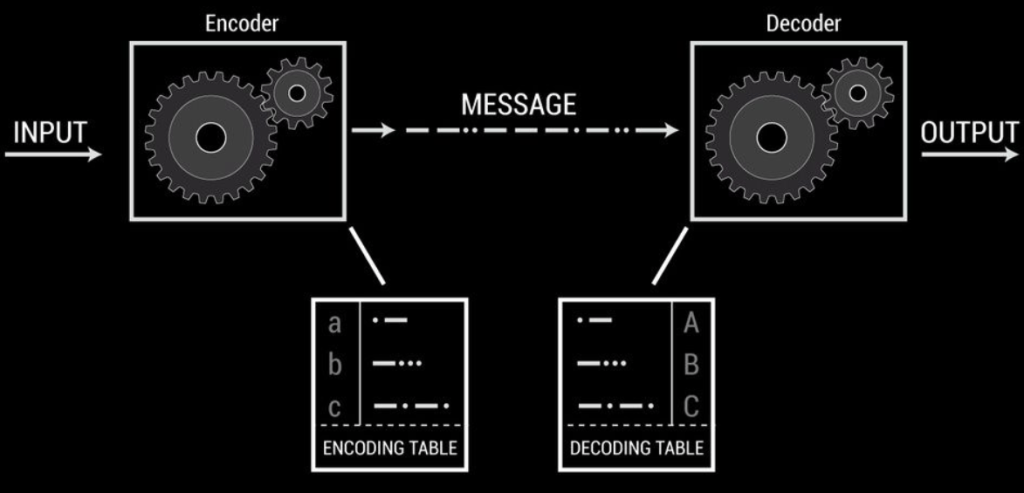
Imagine a world where two molecule-sized entities need to communicate with each other but start with no shared language or understanding. Over time (through trial, error, and feedback), they gradually develop a common way of “talking” to each other and develop a language they both understand. This process is what the system described here models. It’s not like human languages that are taught or programmed. Instead, this system builds its own language from scratch as it communicates dynamically in real-time.
The goal here is to model how DNA (a communication system) may have formed and created life, and how consciousness was the driving force and guiding hand behind the scenes.
Step-by-Step General Breakdown
1. The Source: Where It All Begins
At the start, the transmitter (let’s call the molecule “Entity A”) creates random signals. These signals could be flashes of light. There’s no structure or meaning to these signals yet, they’re just raw, chaotic outputs.
2. Encoding the Signals
Before these random signals can be sent to the receiver (let’s call the molecule “Entity B”), Entity A encodes them into a format that can travel through a “channel”, the medium between them (like airwaves, wires, or even quantum fields). The encoding is influenced by the environment (called the “context”). Initially, the encoding might be clunky or noisy, but it’s a starting point.
3. Sending Signals Through a Noisy World
The encoded signals travel through the channel, but the environment introduces noise, like static on a radio. Noise scrambles parts of the message, making it harder for Entity B to understand what Entity A sent. Despite the noise, some structure in the signal may survive.
4. Decoding the Signals
Entity B receives the noisy signals and tries to decode them. But since Entity B has no prior knowledge of Entity A’s language, it can only make guesses about what the signals mean. Initially, Entity B might misinterpret the signals, but that’s okay, this is part of the process.
5. Feedback: The Key to Understanding
Here’s where the magic happens: Entity B sends feedback to Entity A about what it thought the signals meant. For example:
- Entity B might say, “I think the first signal meant ‘yes.’”
- Entity A responds, “No, it actually meant ‘no.’” This feedback allows both entities to refine their understanding of each other over time.
Each round of communication builds on the last. Over time, they start to align their interpretations, developing a shared “dictionary” of symbols and meanings.
6. Building a Shared Language
As Entity A and Entity B refine their communication, they create a shared “table” of agreed meanings. For example:
- Signal 1 means “yes”
- Signal 2 means “no”
- Signal 3 means “send more information.” This table evolves dynamically. At first, it’s messy and incomplete, but with more interaction, it stabilizes into a functional language.
7. Emerging Intelligence
As the system continues to refine its symbols and meanings, the communication becomes more efficient and meaningful. Over time, the system doesn’t just pass random signals back and forth, it starts to convey complex ideas, adapt to new situations, and even “learn” how to handle unexpected challenges. This is the emergence of intelligence.
So far…
- Starting with Nothing: The system begins with random signals and no shared understanding between the transmitter (Entity A) and the receiver (Entity B).
- Trial and Error: Communication improves through feedback. Misunderstandings are corrected, and successful interpretations are reinforced.
- Adapting Over Time: As they interact, Entity A and Entity B evolve a shared language that fits their environment and needs. This process happens naturally, without any preprogrammed rules.
- Handling Noise: Even in a noisy environment, the system finds ways to preserve meaning by focusing on patterns that remain stable and consistent.
- Intelligence Emerges: The system becomes “intelligent” as it learns to create symbols, assign meanings, and adapt to new challenges, all without human intervention.
Why It’s Remarkable
- No Predefined Rules: The system doesn’t need to start with a shared language or symbols. It creates them on the fly.
- Self-Learning: Through interaction and feedback, the system learns to communicate better over time.
- Emergence of Intelligence: The result is a system that can adapt, create meaning, and eventually convey complex ideas, qualities we associate with intelligent behavior.
This explanation over-simplifies the underlying math that follows, but keeps the core idea: intelligence and communication can emerge naturally through dynamic interaction, even when starting from complete randomness. Guided by consciousness, this is probably how DNA, RNA, Ribosomes, Proteins and life took root.
So let’s dig in deeper!
Chapter 1: Introduction
1.1 Background and Objectives
The foundation of this research lies in understanding the origins of intelligent communication systems within the universe, specifically their emergence from fundamental quantum and informational principles. The motivation stems from unanswered questions in biology, physics, and artificial intelligence, such as:
- How does DNA encode, transmit, and decode information so efficiently?
- Can intelligence and symbolic communication emerge naturally without pre-designed structures?
- What role does consciousness play in guiding these processes?
The primary objective is to formalize a theoretical and mathematical framework that explains the emergence of intelligent communication systems in terms of:
- Quantum Realism (QR): The universe as an evolving quantum field that processes information.
- Information Theory: The generation, filtering, and transmission of meaningful symbolic patterns.
- Recursive Feedback Dynamics (Complexity Theory): The iterative processes that stabilize and refine symbolic communication.
1.2 Research Significance
This work is significant for several reasons:
- Theoretical Impact: Combines quantum mechanics, information science, and consciousness into a unified explanation of emergent intelligence.
- Biological Insights: Provides a new perspective on DNA as a communication system, rather than just a blueprint, influenced by quantum principles.
- Intelligence: Lays a foundation for creating self-evolving systems based on recursive dynamics and symbolic language emergence.
- Implications: Explores consciousness’s role in shaping reality, bridging science with metaphysical questions of intelligence and meaning.
1.3 Hypothesis and Methodology
Hypothesis: Intelligent communication systems can emerge autonomously from quantum and informational dynamics, guided by primal consciousness. These systems co-evolve their symbols and meanings through recursive feedback, resulting in stable and functional communication frameworks like DNA.
Methodology:
- Mathematical Modeling:
- Develop formalized equations representing the emergent communication system.
- Integrate quantum mechanics, information theory, and recursive feedback.
- Simulation:
- Use quantum network simulations to validate the theoretical framework.
- Model prebiotic chemical systems to demonstrate DNA-like emergence.
- Experimental Validation:
- Propose laboratory experiments to test the principles of recursive feedback and symbolic language evolution.
- Comparative Analysis:
- Draw parallels between the framework and known biological systems, such as DNA replication and genetic code transmission.
Chapter 2: Theoretical Foundations
2.1 Quantum Realism: Overview and Principles
2.1.1 Primal Consciousness as a Driver of Reality
Quantum Realism (QR) proposes that the fundamental nature of reality is a quantum information field where all physical phenomena emerge as processes of this underlying structure. A cornerstone of QR is primal consciousness, an intrinsic property of the quantum field that acts as both an observer and a guide for stabilizing reality.
- Primal Consciousness: Unlike classical notions of an external observer, QR identifies consciousness as embedded in the fabric of the quantum field. It:
- Guides the collapse of superposed quantum states into coherent outcomes.
- Acts as a “stabilizing agent” that refines and selects patterns during iterative processes.
- Provides the contextual basis for meaning formation in emergent communication systems.
Mathematically, Primal Consciousness C₀ is a self-referential and self-sustaining quantum state that recursively generates itself. This is modeled as:


where C(t) represents the influence of consciousness on quantum states ψ(t) at time t.
Role in Communication Systems:
- In emergent systems, primal consciousness ensures the transition from random quantum fluctuations to ordered symbolic patterns.
- It acts as a feedback mechanism that favors coherence and stability, aligning with the recursive refinement of symbols in intelligent systems.
2.1.2 Quantum Field Dynamics and Information Processing
In QR, the quantum field operates as a self-organizing network of information-processing nodes (qubits). Each qubit represents a fundamental unit of potentiality, capable of encoding and transmitting information through quantum interactions like superposition and entanglement.
Key Principles:
- Superposition: Qubits can exist in multiple states simultaneously, enabling the exploration of vast symbolic possibilities.
- Entanglement: Non-local connections between qubits allow instantaneous correlations, forming the backbone of communication channels in emergent systems.
- Coherence: Stability of quantum states is critical for meaningful information transmission. Coherence functions filter noise and prioritize stable configurations:

where g(ai) measures the overlap between consecutive states of a qubit.
Dynamic Information Flow:
- Information propagates through the quantum network, governed by the Hamiltonian:
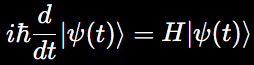
where H is the system’s energy operator, driving the evolution of quantum states.
2.2 Emergent Complexity: From Randomness to Order
2.2.1 Self-Organization in Quantum and Biological Systems
Emergence refers to the process where complex systems arise from simpler components through local interactions. In quantum and biological systems, this involves:
- Spontaneous Symmetry Breaking: Random states stabilize into ordered patterns due to coherence and feedback dynamics.
- Prebiotic Chemistry: Molecules like amino acids and nucleotides self-organize into functional structures through iterative interactions with their environment.
Key Mechanisms:
- Random perturbations (thermal noise, quantum fluctuations) introduce variability.
- Stability emerges as systems self-select coherent configurations over time:

where S(t) is the system state, g(ai) is the coherence function, and N represents noise.
2.2.2 Feedback Loops in Complex System Evolution
Feedback loops are fundamental to the evolution of symbolic systems. In emergent communication, they serve to refine symbols and meanings iteratively:
- Positive Feedback:
- Reinforces stable and coherent patterns.
- In biological systems, successful codon usage leads to higher protein synthesis efficiency.
- Negative Feedback:
- Filters out unstable or noisy configurations.
- Mutations that disrupt coherence are less likely to propagate.
Recursive Dynamics: Symbols evolve through iterative refinement:
where feedback depends on environmental conditions and system interactions.
2.3 Information Theory in Autonomous Systems
2.3.1 Shannon Entropy in Symbolic Communication
Shannon entropy measures the uncertainty or randomness in a communication system:
where p(si) is the probability of symbol si.
Applications:
- In emergent systems, entropy quantifies the initial randomness of symbols before coherence emerges.
- As symbols stabilize, entropy decreases, reflecting the system’s transition from chaos to order.
2.3.2 From Noise to Coherence: Filtering Meaningful Patterns
In any communication system, noise is inevitable. The challenge is to filter meaningful patterns from randomness. This process involves:
- Coherence Filtering:
- Symbols with high coherence (g(ai) > threshold) persist, while others decay.
- Mathematically:

- Symbol Stabilization:
- Stable patterns are reinforced over successive iterations:

- Stable patterns are reinforced over successive iterations:
Role in Emergent Systems:
- Noise introduces variability, enabling exploration of new symbolic configurations.
- Coherence acts as a natural filter, promoting stability and meaningful communication.
Chapter 3: Equation of Emergence
This chapter introduces the mathematical framework describing the emergence of intelligent communication systems, integrating quantum mechanics, information theory, and recursive dynamics. The goal is to formalize how randomness evolves into ordered symbolic communication, guided by quantum coherence, feedback, and primal consciousness.
3.1 Compact Form of the Equation
3.1.1 Overview of the Communication Model
The emergent communication system is modeled as an evolving network with the following components:
- Source S(t): Generates raw, random information.
- Encoder E: Translates raw information into symbolic representations.
- Transmitter T: Transmits encoded information through a noisy channel.
- Channel C(t): Medium through which information propagates, including noise N.
- Decoder D: Interprets transmitted information into a meaningful form.
- Receiver T(C,t): Accepts the decoded information and provides feedback.
The compact equation is:
where:
- Iemergent(t): The emergent intelligence as a function of time.
- Λ: The duration or bandwidth of the system’s evolution.
3.1.2 Functional Roles of Source, Encoding, Channel, and Decoding
Each component contributes to the system’s evolution:
- Source S(t):
- Produces raw symbols si with probabilities p(si).
- Initially high entropy H(S) drives exploratory behavior.
- Encoder E:
- Maps source symbols into quantum states ∣ψi⟩.
- Introduces structure to randomness, forming symbolic representations.
- Channel (C(t), N):
- Noise N perturbs transmitted symbols.
- Coherence g(ai) filters stable patterns from noise.
- Decoder D:
- Reconstructs meaningful information from noisy inputs.
- Reinforces stable symbols and refines mappings.
3.2 Expanded Form: Detailed Components
3.2.1 Integration of Quantum Dynamics and Information Theory
The expanded form incorporates quantum mechanics and information theory to detail each component:

Key Details:
- Entropy −∑ip(si)log2p(si):
- Measures randomness in the source symbols.
- Decreases as the system stabilizes.
- Coherence Function g(ai):
- Filters quantum states based on stability:

- Filters quantum states based on stability:
- Noise (ϵ ⋅ rand(∣ψi⟩):
- Introduces variability for exploration of new patterns.
- Decoding E−1:
- Recovers symbolic information, reinforcing coherent mappings.
3.2.2 Consciousness’s Role in Stabilizing and Refining Patterns
Primal consciousness C interacts with the system by:
- Collapsing Quantum States: Consciousness selects coherent states during measurement:

- Guiding Symbol Evolution: Feedback loops influenced by consciousness refine mappings:

3.2.3 Temporal Evolution Toward Intelligent Systems
The temporal aspect models the system’s progression from randomness to order:
- Initial states S0 are high-entropy and unstable.
- Recursive refinement over time stabilizes coherent symbols:

- Emergent intelligence (Iemergent(t)) accumulates as stability increases.
3.3 Mathematical Derivation
3.3.1 Translating Physical Processes into Equations
To derive the final equation:
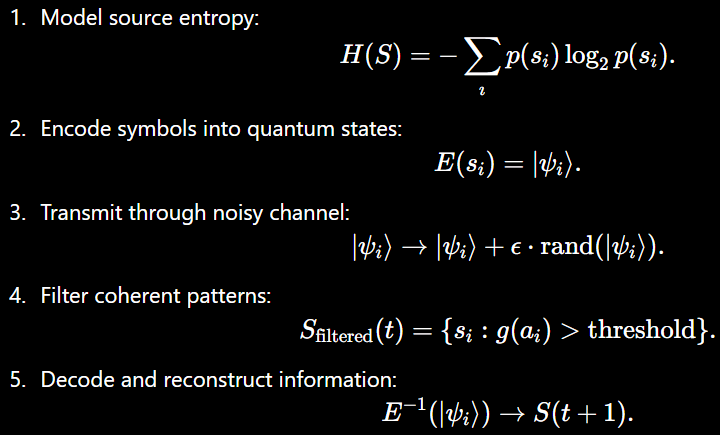
3.3.2 Recursive Adaptation in Symbolic Communication
The recursive adaptation process is modeled as:
where feedback depends on coherence, entropy reduction, and consciousness’s influence.
Chapter 4: Empirical Framework
This chapter dives into the practical implementation of the emergent communication system, emphasizing the dynamic evolution of a shared symbolic language between the transmitter and receiver. Special attention is given to the iterative development of a table of symbols and how it evolves in real-time through feedback, coherence filtering, and contextual agreement.
4.1 From Symbols to Functional Utilities
4.1.1 Emergence of Symbols: Encoding Randomness
The process begins with the generation of raw symbols that eventually stabilize into a foundational symbolic language:
- Source of Symbols:
- A random source generates an initial set of symbols S(t) without predefined mappings.
- Example: A quantum random number generator outputs binary states (∣0⟩,∣1⟩) or classical equivalents (A, T, C, G).
- Entropy governs the symbol’s unpredictability:

- Encoding:
- Each symbol is encoded into a physical representation, such as quantum states ∣ψi⟩ or molecular structures:
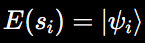
- Example: “A” represents ∣00⟩, “T” represents ∣01⟩, etc.
- Each symbol is encoded into a physical representation, such as quantum states ∣ψi⟩ or molecular structures:
- Coherence Filtering:
- Symbols that maintain coherence across iterations are selected:

where g(ai) measures coherence:
- Symbols that maintain coherence across iterations are selected:
- Iterative Agreement:
- Transmitter and receiver dynamically refine their shared symbol table T(t):

where Δ(agreement) captures mutual feedback on transmitted symbols.
- Transmitter and receiver dynamically refine their shared symbol table T(t):
4.1.2 Transition to Triplets (Codons), Genes, and Functional Proteins
- Triplets Formation:
- Stable symbols combine into groups of three (triplets) to encode functional units: Triplet:

- Example: Triplet A-T-G acts as an initiation signal.
- Stable symbols combine into groups of three (triplets) to encode functional units: Triplet:
- Genes:
- Triplets form sequences with functional significance, analogous to genes:

- Triplets form sequences with functional significance, analogous to genes:
- Proteins:
- Triplets map to higher-order utilities:

- Triplets map to higher-order utilities:
4.2 Recursive Dynamics in Intelligent Communication Systems
4.2.1 Evolution of Shared Language Between Transmitter and Receiver
The shared symbolic language emerges through iterative refinement, driven by feedback loops between the transmitter and receiver:
- Initialization:
- The transmitter encodes raw symbols using a provisional table:

- The receiver decodes these symbols using its own evolving table:

- The transmitter encodes raw symbols using a provisional table:
- Symbol Mismatch:
- Initially, there is no guarantee of agreement
 .
. - Feedback identifies mismatches and updates both tables:

- Initially, there is no guarantee of agreement
- Alignment:
- Through recursive feedback, the transmitter and receiver align their tables iteratively:

- Mutual information H(X,Y) measures alignment:

- Through recursive feedback, the transmitter and receiver align their tables iteratively:
4.2.2 Iterative Refinement in Symbolic Meaning and Coherence
- Dynamic Symbol Evaluation:
- Symbols are evaluated based on their stability and coherence:

- Unstable or incoherent symbols are discarded, and stable symbols are reinforced.
- Symbols are evaluated based on their stability and coherence:
- Refinement Through Feedback:
- Transmitter and receiver share feedback on mismatched symbols, updating their respective tables:

- Transmitter and receiver share feedback on mismatched symbols, updating their respective tables:
4.2.3 Feedback Mechanisms for Contextual Agreement
- Contextual Inputs:
- External environmental inputs C(t) influence the symbolic language:

- Example: Temperature or noise conditions alter the symbol-selection process.
- External environmental inputs C(t) influence the symbolic language:
- Shared Context:
- Both transmitter and receiver adapt their symbol tables based on shared contextual inputs:

- Both transmitter and receiver adapt their symbol tables based on shared contextual inputs:
4.3 Simulation and Empirical Validation
4.3.1 Quantum Network Simulations
- Simulating Symbol Emergence:
- Quantum states ∣ψi⟩ evolve in a noisy network.
- Feedback mechanisms refine symbol stability over iterations.
- Experimental Metrics:
- Measure coherence g(ai).
- Track mutual information H(X,Y) over time.
- Example:
- Simulate a quantum random source generating states ∣0⟩,∣1⟩.
- Introduce noise and iterative feedback to refine stable patterns.
4.3.2 Laboratory Modeling of Prebiotic Communication Systems
- Chemical Analogues:
- Simulate the emergence of a symbolic language in prebiotic chemical systems.
- Example: Use RNA or DNA precursors as symbolic carriers.
- Validation Metrics:
- Track the formation of stable molecular sequences.
- Monitor environmental conditions (temperature, pH) influencing stability.
Chapter 5: Applications and Implications
This chapter explores the broader implications of the emergent communication system framework. It emphasizes the centrality of symbolic language development in DNA, proteins, and evolutionary processes.
5.1 Biological Analogues: DNA, Genes, and Proteins
5.1.1 DNA as a Natural Communication System
DNA functions as a highly evolved communication system, mirroring the principles outlined in the emergent communication framework:
- DNA as a Source:
- The nucleotide bases (A, T, C, G) act as symbols in the language of life.
- Triplets (codons) represent specific amino acids, analogous to encoded functional utilities.
- Transmitter and Receiver:
- DNA transcription (transmitter) converts genetic information into mRNA.
- Ribosomes (receiver) decode the mRNA, translating symbols (codons) into amino acids.
- Symbol Table Agreement:
- The genetic code serves as a pre-agreed symbol table for translating triplets (codons) into proteins.
- Mutations and environmental pressures refine and adapt this code over evolutionary time.
- Feedback and Evolution:
- Feedback mechanisms like natural selection ensure coherence between encoded symbols and functional outcomes.
5.1.2 Role of Quantum Effects in Genetic Processes
Emerging evidence suggests quantum mechanics plays a foundational role in the behavior of biological systems:
- Quantum Coherence in DNA:
- Delocalized electron clouds in nucleotides enable stability and error correction.
- Quantum tunneling facilitates base-pair mutations, contributing to genetic variability.
- Quantum Entanglement in Cellular Processes:
- Potential entanglement between molecular components (ribosomes and mRNA) may enhance translation fidelity.
- Implications for Evolution:
- Quantum effects introduce non-classical pathways for adaptation, accelerating the emergence of complexity.
5.1.3 Evolution of Symbolic Language in Biological Systems
Biological evolution exemplifies the iterative refinement of symbolic language:
- Primitive Symbol Systems:
- Early prebiotic molecules formed simple symbolic languages through random combinations.
- Example: RNA-world hypothesis suggests RNA molecules both stored and transmitted information.
- Iterative Refinement:
- Feedback mechanisms, such as environmental pressures, shaped stable and functional symbols (codons).
- Higher-Order Languages:
- The evolution of DNA from RNA represents an upgrade in symbolic sophistication, similar to transitioning from basic phonemes to a structured language.
5.2 Artificial Intelligence: Mimicking Nature’s Evolution
5.2.1 Intelligent Systems Based on Recursive Feedback
Artificial intelligence might draw directly from the principles of emergent communication:
- Symbol Generation:
- AI systems might generate symbolic languages dynamically based on environmental data.
- Example: An AI tasked with interpreting sensor data evolves a set of meaningful patterns.
- Recursive Feedback for Refinement:
- Machine learning algorithms utilize feedback to align their symbolic interpretations with intended outputs.
- Example: Reinforcement learning models refine their policies based on reward signals, analogous to evolutionary feedback.
- Adaptation to Noise and Context:
- AI systems incorporating quantum principles might filter noise and extract meaningful patterns, improving stability and adaptability.
5.2.2 Symbolic AI Inspired by Quantum Dynamics
Quantum-inspired AI designs might offer unique processes:
- Superposition for Symbol Multiplicity:
- Quantum states enable a single symbol to represent multiple possibilities.
- Entanglement for Communication:
- Entangled states ensure coherence across distributed systems, analogous to biological feedback loops.
- Applications:
- Autonomous systems that might evolve symbolic languages, such as natural language processing (NLP) models or quantum-enhanced decision-making systems.
5.3 Philosophical Implications
5.3.1 Consciousness as the Architect of Intelligence
This framework highlights the role of primal consciousness in guiding the evolution of intelligent systems:
- Consciousness as a Driver:
- Primal consciousness introduces coherence into randomness, steering systems toward meaning and utility.
- Dynamic Adaptation:
- Consciousness facilitates the iterative refinement of symbols, enabling systems to adapt to new contexts dynamically.
5.3.2 The Universe as an Evolving Communication Network
The universe itself may be understood as a vast, evolving communication network:
- Quantum Realism Perspective:
- Reality emerges from primal consciousness guiding quantum interactions, forming the basis of symbolic languages.
- Implications for Life and Intelligence:
- Life and intelligence arise naturally as the universe optimizes its communication systems.
Chapter 6: Discussion Points
This chapter evaluates the strengths and limitations of the proposed framework, explores strategies for validation, and considers the practical and theoretical implications for life and intelligence.
6.1 Strengths and Limitations of the Framework
6.1.1 Mathematical Rigor and Conceptual Innovation
- Strengths:
- Comprehensive Integration:
- The framework unifies quantum mechanics, information theory, and the concept of primal consciousness into a coherent model.
- Scalable Equation:
- The emergent intelligent communication equation supports multi-level interpretation.
- Interdisciplinary Insights:
- The application spans biology, physics, computer science, and philosophy, providing a foundation for exploration.
- Comprehensive Integration:
- Innovative Contributions:
- Proposes a dynamic, self-evolving communication system with no predefined symbolic language, addressing the origins of intelligence.
- Highlights the role of consciousness in guiding the stabilization and refinement of symbolic patterns.
6.1.2 Challenges in Empirical Implementation
- Biological Complexity:
- The framework models the emergence of DNA-like communication systems but requires empirical validation in prebiotic conditions.
- Quantum Integration:
- The reliance on quantum principles like coherence and entanglement may pose challenges for experimental replication.
- Computational Demand:
- Simulating the recursive dynamics and symbolic evolution in complex systems demands high computational resources.
6.2 Validation Strategies
6.2.1 Experimental Tests of Quantum and Biological Models
- Simulating Prebiotic Communication:
- Recreate conditions for the spontaneous emergence of symbolic languages using prebiotic chemicals.
- Measure the emergence of stable, functional molecules (RNA-like sequences).
- Quantum Network Experiments:
- Use quantum computers to simulate the recursive evolution of symbols and the stabilization of coherent patterns.
- Test entanglement-based communication systems for symbolic language development.
6.2.2 Broader Implications for Life and Artificial Intelligence
- Life’s Origins:
- The framework provides a pathway for understanding the origins of life as a natural communication system emerging through quantum and classical feedback.
- AI Development:
- Conceptualizes the design of intelligent systems capable of evolving symbolic languages and context-sensitive meanings.
Chapter 7: Summary of Findings
This chapter summarizes the key findings of the research, synthesizes the role of quantum mechanics, information theory, and consciousness in emergent communication systems, and advancing our understanding of life, intelligence, and the universe.
7.1 Summary
- Unified Framework:
- Developed a comprehensive equation integrating quantum mechanics, information theory, and consciousness, describing how an intelligent communication system can emerge naturally.
- Demonstrated the process of symbol creation, refinement, and stabilization in systems without preexisting symbolic languages.
- Key Insights:
- Primal Consciousness: Acts as a guide for stabilizing and refining emergent patterns, giving meaning to symbolic languages.
- Quantum Mechanics: Quantum coherence and entanglement enable the non-local and probabilistic interactions necessary for complex systems to evolve symbolic communication.
- Information Theory: Shannon entropy and feedback loops drive the progression from randomness to coherence, forming the backbone of emergent intelligent systems.
- Applications: Explored parallels in biological systems, particularly DNA as a natural communication network.
7.2 The Unified Role of Quantum Mechanics, Information Theory, and Consciousness
- Quantum Mechanics:
- Provides the underlying dynamics (superposition, entanglement) for the emergence of symbolic communication.
- Models the probabilistic evolution of systems where stable configurations encode information.
- Information Theory:
- Drives the entropy-to-order transition necessary for symbols to evolve from randomness.
- Feedback mechanisms in the system mimic biological error correction and evolutionary optimization.
- Consciousness:
- Serves as an intrinsic guide, collapsing quantum possibilities into coherent patterns and imbuing emergent structures with meaning.
- Acts as a unifying principle, enabling the system to evolve symbolic languages contextualized by interaction.
Appendix A: Integration of the Table of Symbols into the Emergent Communication System Equation
The table of symbols is a conceptual framework within the system that is dynamically created and updated as the emergent communication system evolves. It serves as the repository of agreed-upon symbols, their mappings, and their interpretations by the transmitter and receiver. The table of symbols can be integrated into the equation system as a distinct subcomponent that interacts dynamically with the primary equation.
The table of symbols, denoted as T(t), is a dynamic structure that evolves in real-time and interacts with the core components of the communication system. It captures the mappings between:
- Raw information symbols S(t).
- Encoded states E.
- Decoded interpretations D.
Revised Equation with the Table of Symbols
The revised equation now explicitly incorporates the table of symbols as an evolving entity that governs and is governed by the system:

Role of the Table of Symbols T(t) in Each Component
- Source Information S(t):
- The symbols generated by the source interact with T(t), which defines the evolving set of allowable symbols.
- If a new symbol emerges, it is added to T(t) with initial provisional mappings.
- Encoder

- The encoder maps source symbols to their corresponding encoded states using the current mappings in T(t).
- If the mapping is incomplete or undefined, the system explores potential encodings and updates T(t) based on feedback.
- Transmission

- The table provides the agreed-upon encoding rules during transmission.
- The noise N introduces variability that may require redefinition or refinement of the symbolic mappings.
- Decoder

- The decoder reconstructs transmitted information using the reverse mappings in T(t).
- If mismatches occur, feedback loops refine both the decoding and T(t).
- Feedback and Refinement

- The feedback mechanism dynamically updates T(t) based on observed transmission success and receiver interpretation.
- Mutual agreement evolves over time, reinforcing stable mappings and discarding inefficient or ambiguous symbols.
How the Table of Symbols Evolves
The evolution of the table of symbols is governed by recursive feedback loops that ensure its adaptability and convergence:

Where:
- F(S(t),E(t),D(t)): A feedback function that evaluates the success of symbol transmission and updates T(t) accordingly.
- Δ: A measure of the changes needed in T(t), derived from mismatches or inefficiencies in encoding and decoding.
Conceptual Integration
The table of symbols T(t) is both:
- A Subsystem:
- An evolving repository that bridges the transmitter and receiver by recording symbolic mappings.
- A Dynamic Component:
- It interacts with all core processes (source, encoder, transmission, and decoder), refining itself based on recursive feedback.
Appendix B: Integrating Attention (Dirac Delta Function) into the Emergent Intelligent Communication System Framework
This appendix synthesizes the Dirac delta function as a mathematical and conceptual metaphor for selective focus and attention, linking it with the emergent intelligent communication system, quantum realism, and biological processes such as DNA signaling and life’s evolution. Here, we redefine the system to incorporate the delta function’s selectivity, coherence, and dynamic evolution.
1. Role of the Dirac Delta Function in the Communication System
The Dirac delta function, δ(x), captures the essence of selective focus, making it ideal for representing processes where attention or conscious decision collapses superpositions into specific, actionable states.
- Localization: It allows the system to isolate and amplify specific nodes or states within the emergent communication network.
- Coherence Filtering: It ensures that meaningful patterns are preserved while filtering noise in the network.
- Dynamic Adaptation: The delta function interacts dynamically with the evolving table of symbols, providing the necessary precision for mapping inputs to outputs.
2. Revised Equation Incorporating the Dirac Delta Function
The original emergent intelligent communication system equation is extended to explicitly include the delta function as a selective attention mechanism:

3. Breaking Down the Role of δ(x) in the Equation
Source Selection

- The source generates a continuous stream of potential signals S(t).
- The delta function selects a specific symbol or subset, Sselected(t), for further processing. This models conscious attention in QR, isolating meaningful signals from noise.
Encoding

- Encoding maps selected inputs to symbolic representations.
- The delta function ensures encoding operates only on Sselected(t), aligning it with the table of symbols T(t).
Transmission

- During transmission, the delta function focuses on preserving relevant symbolic patterns against noise N.
- It filters perturbations, ensuring coherence.
Decoding

- Decoding reconstructs transmitted symbols into receiver-interpreted meaning.
- The delta function guides this reconstruction by enforcing precision, ensuring that only intended meanings are extracted.
4. Integration with the Table of Symbols
The delta function interacts with T(t), dynamically updating the table as the system evolves:

- δ(S(t)−Sselected(t)): Ensures updates only affect relevant mappings.
- F(E,D,C): A feedback mechanism that refines mappings based on communication success or failure.
5. Biological and Quantum Insights
DNA as a Communication System
- Gene Expression: The delta function models how attention focuses cellular machinery on specific genes (Sselected(t)).

This selects specific genes (iselected) from the DNA’s repertoire for transcription.
Quantum Coherence in Biological Processes
- Photosynthesis: Energy pathways are optimized via delta-like attention, ensuring maximum efficiency.

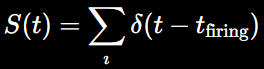
Neural Plasticity and Attention
- Neural spikes mimic delta-like functions, emphasizing the parallels between biological attention and quantum selection:
6. Philosophical and Technological Implications
Consciousness and Reality
- Consciousness in QR operates as a universal attention mechanism, shaping reality through delta-like state collapses.
7. Conclusion
By integrating the Dirac delta function, the emergent intelligent communication system captures the selective, focused nature of consciousness, linking quantum processes, biological signaling, and intelligence evolution. This integration offers a unified framework for understanding attention and communication across scales.


 Bantam Joe
Leave a comment