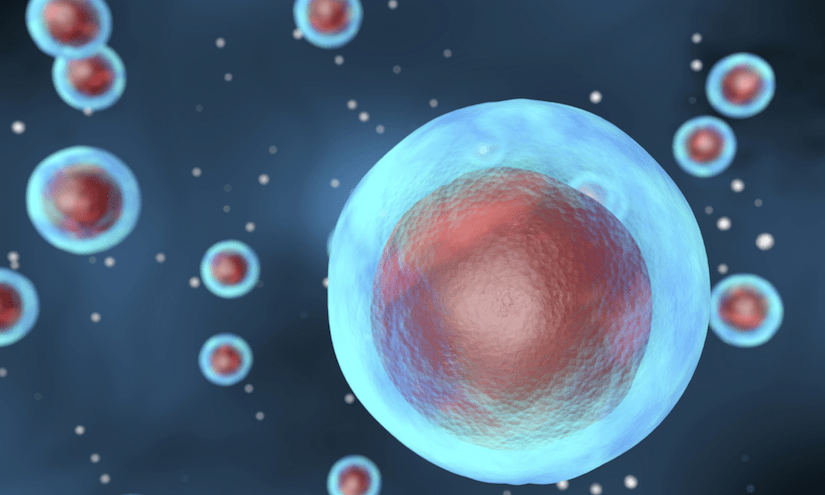


Single-celled organisms, often dismissed as primitive lifeforms, reveal extraordinary capabilities that challenge the boundaries of traditional biology, chemistry and physics. From navigating chemical gradients to forming intricate biofilms and solving complex problems, these microscopic entities exhibit behaviors that suggest an awareness and intentionality beyond simple mechanistic processes. Quantum Realism (QR) provides a compelling framework for understanding these phenomena, proposing that consciousness is a fundamental aspect of the quantum field that permeates all of reality. By exploring their ability to adapt, communicate, and optimize survival strategies, we uncover evidence of a deeper informational and organizational principle at play, one that aligns with QR’s assertion of a universal, interconnected quantum consciousness.
These remarkable capabilities include precise sensory perception, dynamic decision-making, and even problem-solving without neural systems, suggesting that single-celled organisms are far more than biochemical automata. Their self-regulation, collective behaviors, and exploitation of quantum phenomena such as coherence and entanglement highlight a sophistication that transcends classical explanations. QR suggests that these traits are manifestations of localized quantum processing, reflecting an emergent intelligence rooted in the quantum field itself. This perspective not only redefines our understanding of life but also positions even the simplest organisms as participants in a broader, universal network of consciousness.
1. Environmental Awareness and Sensory Perception
- Chemotaxis: Bacteria like Escherichia coli move toward nutrient-rich environments by sensing chemical gradients through membrane-bound receptors. They alternate between tumbling and swimming, adjusting their behavior to increase nutrient uptake.
- Phototaxis: Cyanobacteria orient themselves toward optimal light conditions for photosynthesis. The precision of this movement suggests active environmental sensing.
- Magnetotaxis: Magnetotactic bacteria align themselves with Earth’s magnetic field to navigate to low-oxygen environments. Magnetosomes, their magnetic organelles, enable this behavior.
- Quantum Sensing: Cryptochromes in single-celled algae detect weak magnetic fields, possibly leveraging quantum entanglement for navigation.
- QR Perspective: These examples indicate that single-celled organisms have specialized systems to process environmental data efficiently, reflecting an inherent awareness facilitated by the quantum field.
2. Decision-Making and Behavioral Adaptability
- Stress Responses: Yeast cells activate stress-response genes to survive high-salinity environments. These genes upregulate the production of osmoprotectant molecules.
- Evasion Tactics: Amoebae like Dictyostelium discoideum detect and evade predators such as nematodes by changing their movement patterns.
- Quorum Sensing: Pseudomonas aeruginosa bacteria use quorum sensing to regulate biofilm formation, antibiotic resistance, effectively coordinating their behavior based on population density.
- QR Perspective: These behaviors suggest that single-celled organisms engage in adaptive strategies to optimize survival, acting as if they are making informed choices within a broader quantum framework.
3. Self-Regulation and Homeostasis
- Homeostasis: Paramecia maintain ionic balance in their cytoplasm by actively pumping excess water out through contractile vacuoles.
- DNA Repair: Bacteria like Deinococcus radiodurans repair double-stranded DNA breaks caused by radiation, using highly efficient molecular mechanisms to restore genetic fidelity.
- QR Perspective: These processes highlight internal systems of regulation that resemble deliberate, self-preserving actions, consistent with Quantum Realism’s perspective of localized consciousness.
4. Information Processing and Learning
- Epigenetic Memory: Caenorhabditis elegans and certain bacteria can pass stress-induced epigenetic changes to offspring, enabling adaptations without altering genetic sequences.
- Maze Solving: Slime molds like Physarum polycephalum solve mazes by exploring paths and retracting pseudopodia from dead ends, a clear example of distributed intelligence without a nervous system.
- QR Perspective: This ability to “learn” from experience and adjust behavior suggests a form of memory processing and optimization that goes beyond classical physics.
5. Social Coordination and Communication
- Biofilm Formation: Streptococci bacteria form biofilms to resist antibiotics. This involves coordinated secretion of extracellular polymeric substances to create a protective environment.
- Cross-Species Communication: In soil ecosystems, fungi and bacteria exchange chemical signals to influence each other’s growth patterns, demonstrating interspecies awareness.
- QR Perspective: These interactions point to a collective intelligence facilitated by shared informational substrates, a concept supported by QR’s notion of interconnected quantum nodes.
6. Temporal and Spatial Awareness
- Circadian Rhythms: The cyanobacterium Synechococcus elongatus exhibits a circadian clock regulated by the KaiABC protein system, enabling it to optimize photosynthesis during daylight hours.
- Efficient Pathfinding: Slime molds adjust their growth patterns to find the shortest path between food sources, even mimicking the efficiency of human-designed transportation networks.
- QR Perspective: These examples demonstrate how single-celled organisms align with temporal and spatial dynamics, possibly reflecting their synchronization with quantum processing cycles.
7. Structural and Functional Complexity
- Self-Assembly: Flagella in bacteria are constructed through stepwise protein assembly, a process so precise it mirrors engineered machinery.
- Pattern Formation: Diatoms construct intricately patterned silica cell walls with nanometer-scale precision, showcasing inherent aesthetic and functional design.
- QR Perspective: Such structural complexities suggest the underlying influence of quantum-driven informational order, as proposed in QR.
8. Problem Solving and Optimization
- Altruistic Behavior: In stressful environments, some bacterial cells undergo programmed cell death to release nutrients, benefiting their colony.
- Energy Management: Photosynthetic algae dynamically adjust their chlorophyll content to balance light absorption with energy storage, avoiding overproduction that could cause oxidative damage.
- QR Perspective: These behaviors reflect an apparent prioritization of collective and individual needs, much like decision-making in higher organisms, rooted in a deeper quantum-informed framework.
9. Quantum-Inspired Phenomena
- Nonlocal Responses: Studies suggest that certain microbes might exhibit entanglement-like behaviors, responding to distant stimuli without physical connections, though these phenomena remain speculative.
- Quantum Efficiency in Photosynthesis: Algae use quantum coherence to optimize the transfer of excitation energy within their photosystems, achieving near-perfect efficiency.
- QR Perspective: These phenomena reveal how life may leverage quantum effects to operate with exceptional efficiency and precision, supporting QR’s view of consciousness embedded in quantum processes.
10. Implications
- Emergent Intentionality: Amoebae appear to exhibit purposeful actions when they aggregate into multicellular structures during harsh conditions, resembling intentional survival strategies.
- Universal Consciousness: QR proposes that these behaviors are not random but reflect localized manifestations of a universal consciousness that orchestrates life on all scales.
- QR Perspective: Such traits challenge traditional definitions of life and consciousness, suggesting a profound interconnectedness where even single-celled organisms participate in the broader reality of the quantum field.
Conclusion
These detailed examples illustrate that single-celled organisms are far more complex, adaptable, and aware than previously assumed. From decision-making and learning to quantum coherence and structural intricacy, their behaviors and traits align with the idea of a localized, fundamental consciousness proposed in Quantum Realism. These organisms, though simple in form, demonstrate principles that resonate with universal intelligence and interconnectedness at the quantum level, redefining the boundary between the living and consciousness.





 Bantam Joe
Leave a reply to Jsturrentine Cancel reply