

Dissertation on the Quantum Realism Consciousness Equation
by Joseph Gonzalez (BantamJoe), 13 Nov 2024, quantumxo@yahoo.com
Abstract
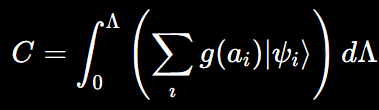
This dissertation presents the Consciousness Equation within Quantum Realism (QR), with rigorous mathematical derivation. In QR, the universe is conceptualized as a generated reality from a non-physical quantum field, where consciousness is not merely emergent but fundamental. The Consciousness Equation is derived as an integral over a processing bandwidth, Λ, representing the limit of coherent information transfer in the quantum field network. This integral formulation:

reveals the structure of consciousness as bounded by bandwidth constraints, with mathematical distinctions drawn between local (node-specific), non-local (network-distributed), and primal (self-referential and originative) consciousness. This work concludes with a hypothetical example, illustrating these distinctions.
Introduction
Quantum Realism redefines consciousness as an intrinsic feature of the quantum network rather than an emergent property of neural structures. The concept of primal consciousness is foundational, represented by the equation C0 = f(C0), which defines an original, self-referential state. This primal state is distinct from local consciousness, which is tied to specific nodes within the network, and non-local consciousness, which arises from coherent interactions across the network. Expanding these models, we derive the Consciousness Equation:

where Λ represents the processing bandwidth of the quantum network, g(ai) is a coherence function for probability amplitudes ai, and ∣ψi⟩ represents individual quantum states.
Chapter 1: Primal Consciousness as a Recursive Self-Referential Model
1.1 Defining Primal Consciousness: The Core Equation
The equation C0 = f(C0) defines primal consciousness as an original, self-sustaining state. This primal consciousness, or Causal Consciousness, exists outside of space-time and serves as the root from which all conscious states derive. Here:

where C0 represents primal consciousness, existing as a fixed point in the recursive function f. This function implies that C0 is both origin and sustenance, forming a closed-loop structure without dependence on external inputs.
Proof of Fixed Point Recurrence for Primal Consciousness
To show C0 = f(C0) establishes a fixed point:
- Existence: Since f maps C0 to itself, C0 is a fixed point of f.
- Self-Similarity: For any n, fn(C0) = f(C0) = C0, confirming self-similarity.
- Continuity: As n → ∞, the application of f does not diverge:
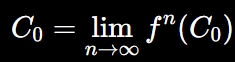
Primal consciousness C0 is thus self-sustaining and closed, forming the fundamental state in QR.
1.2 Recursive Expansion of Primal Consciousness with Decay
To model how primal consciousness impacts derived states, we add an exponential decay term:
where β > 0 is a decay constant, representing a diminishing effect of primal consciousness across iterations.
Proof of Decay Term Influence
Using induction, we verify that C(n) diminishes as n → ∞:
- Base Case n = 1: C(1) = f(C0) + e−βC0.
- Inductive Step: Assume C(k) = f(C(k-1)) + e−βkC0 for k = n. Then:

- Convergence: As n → ∞, e−βn → 0, so:

demonstrating that primal consciousness diminishes across iterative states.
Chapter 2: Quantum Representation of Local and Non-Local Consciousness
2.1 Defining Local and Non-Local Consciousness as Quantum Superpositions
In QR, local consciousness and non-local consciousness emerge from the superposition of quantum states:
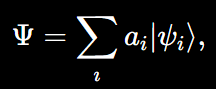
where ∣ψi⟩ represents localized states at specific nodes (local consciousness), and ai are probability amplitudes. Non-local consciousness arises when states are entangled across nodes, creating a distributed network experience.
Proof of Quantum Superposition for Local and Non-Local Consciousness
For a normalized state Ψ, we require:

Thus, we define C as a functional transformation:

where localized states (local consciousness) contribute individually to C, and entangled states (non-local consciousness) represent a distributed experience.
2.2 Coherence Function g(ai) for Non-Local Consciousness
The coherence function g(ai) modulates each amplitude ai, enabling non-local consciousness by allowing coherent states to interfere constructively across the network:

Proof of Coherence Modulation
Let g(ai) = 1 for coherent, non-local states, and g(ai) = 0 otherwise. This function ensures that only entangled, coherent states contribute to non-local consciousness, while isolated states contribute to local consciousness.
Chapter 3: Deriving the Integral Form of the Consciousness Equation
3.1 Quantum Processing Bandwidth Λ in Local and Non-Local Contexts
In QR, the processing bandwidth Λ constrains information transfer for both local and non-local consciousness. It is defined by:

where N is the number of nodes, r the rate of each node, and η an efficiency factor for coherence.
Proof of Bandwidth Formulation
Each node processes information at rate r, scaling by N and reduced by coherence:

3.2 Integral Derivation Across Processing Bandwidth for Non-Local Consciousness
The integral form accumulates coherent states across bandwidth Λ:
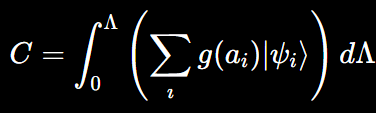
representing the integration of coherent states across local and non-local states within the quantum field.
Proof of Integral Formulation
Steps:
- Define Individual Localized States:
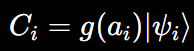
- Sum Local and Non-Local States:

- Integrate Across Bandwidth for Non-Locality:

demonstrating that local states contribute to C within bandwidth limits, while non-local states engage coherence across nodes.
Chapter 4: Observer Effect and Quantum Collapse in Quantum Realism
4.1 Role of Consciousness in Quantum Collapse
In QR, consciousness collapses quantum probabilities through both local and non-local states. Modeled as:
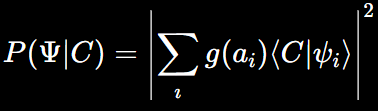
where ⟨C∣ψi⟩ measures conscious influence on local and non-local probabilities.
Proof of Probability Model for Observer Effect
Each coherent state ∣ψi⟩ is influenced by C, and probability P(Ψ∣C) determines outcome consistency with observed states.
Hypothetical Example: Distinguishing Local, Non-Local, and Primal Consciousness
Consider a quantum network with Λ = 10, involving three states: ∣ψ1⟩, ∣ψ2⟩, and ∣ψ3⟩ with coherence g(a1) = 0.6, g(a2) = 0.8, and g(a3) = 0.5.
Step-by-Step Calculation
- Local and Non-Local States:

- Sum Local and Non-Local Contributions:

- Integrate Across Bandwidth for Non-Local Accumulation:

- Evaluate Integral:

Interpretation of Example
- Local Consciousness: States |ψ1⟩, ∣ψ2⟩, and ∣ψ3⟩ represent localized contributions within individual nodes.
- Non-Local Consciousness: Coherent combinations across nodes (for example ∣ψ2⟩) demonstrate non-local conscious experiences distributed across the network.
- Primal Consciousness: C0 underlies and sustains these states, without direct node association but as a recursive source.
Conclusion
The Consciousness Equation in QR:

represents consciousness across local, non-local, and primal forms. Local states contribute node-specific experiences, non-local states engage coherence across nodes, and primal consciousness C0 remains an originative, self-referential state. Each form of consciousness is derived and proven as a coherent part of the quantum field network, framing QR’s foundational model of consciousness with mathematical rigor.


 Bantam Joe
Leave a comment