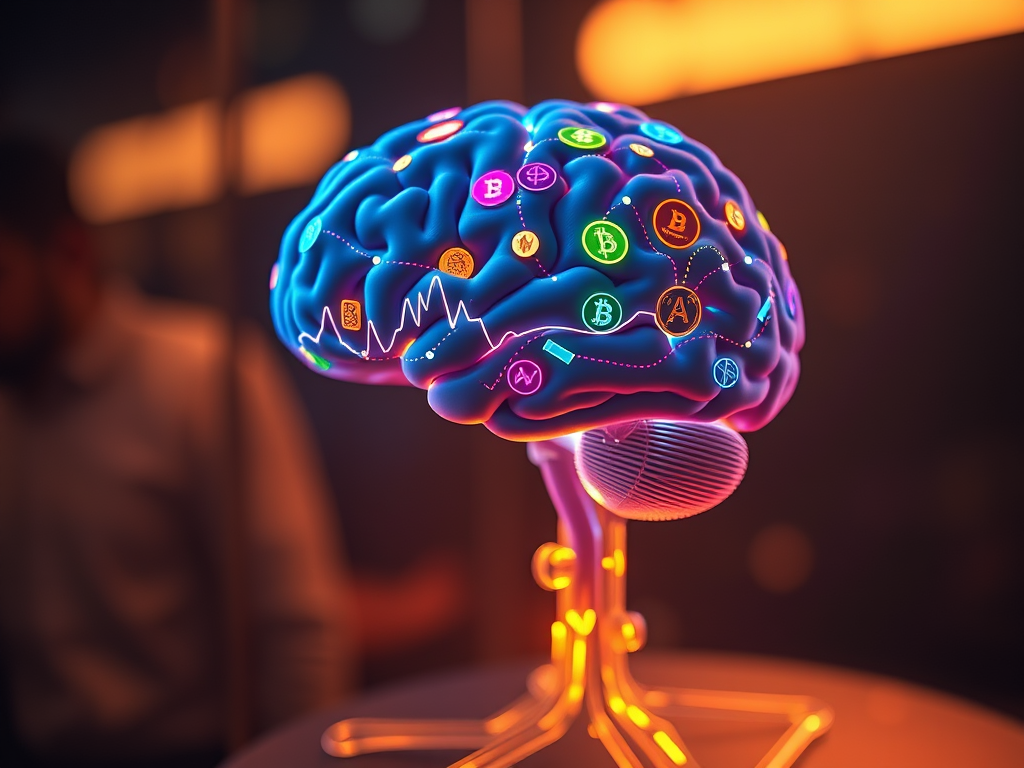


Conquering the mind is the holy grail of the elite class. What they would do with your mind has no limits. Here is one trajectory currently being pursued.
Transhumanist/Post-Humanist architects and engineers are hard at work transforming our world. One of the many goals is to create a collective mind network for the purpose of tackling hard or nearly unsolvable problems, using a collection of human brain power, a mind-hive network. Another goal is to tokenize brain cycles in a new tokenized economy of the minds.
This post explores the technology and the proposed tokenized blockchain mind-economy. The likelihood of this system coming into effect, if we allow this trajectory to continue, is very real!
In a past post, I showed this whitepaper, written in 2016, by social engineer Melanie Swan, proposing a brain-computer-interface (BCI) blockchained brain-cycles economy. Effectively tokenizing and harvesting the human mind.
Document found here: https://jetpress.org/v26.2/swan.htm
In Melanie Swan’s paper, her introduction:
“The aim of this paper is to explore the development of brain-computer interfacing and cloudminds as possible future scenarios. I describe potential applications such as selling unused brain processing cycles and the blockchaining of personality functions. The possibility of ubiquitous brain-computer interfaces that are continuously connected to the Internet suggests interesting options for our future selves. Questions about what it is to be human; the nature of our current existence and interaction with reality; and how things might be different could become more prominent. I examine speculative future scenarios such as digital selves and cloudmind collaborations. Applications could be adopted in tiers of advancing complexity and risk; starting with health tracking; followed by information seeking and entertainment; and finally; self-actualization. By linking brains to the Internet; BCIs could allow individuals to be more highly connectable not just to communications networks but also to other minds; and thus could enable participation in new kinds of collective applications such as a cloudmind. A cloudmind is the concept of multiple individual minds joined together to pursue a collaborative goal such as problem solving; idea generation; creative expression; or entertainment. The prospect of cloudminds raises questions about individual versus collective personhood. Some of the necessary conditions for individuals to feel comfortable in joining a cloudmind include privacy; security; reversibility; and retention of personal identity. Blockchain technology might be employed to orchestrate the security; automation; coordination; and credit-assignation requirements of cloudmind collaborations.”
Website: https://www.melanieswan.com/
What are Brain Cycles?
Brain cycles, often referred to as brain oscillations or rhythms, are patterns of electrical activity that occur at various frequencies within the brain. These oscillations reflect coordinated neural firing patterns and are associated with different cognitive and physiological states. The major brain cycles include:
- Delta Waves (0.5-4 Hz): Predominant in deep sleep (stages 3 and 4 of non-REM sleep), associated with restorative functions.
- Theta Waves (4-8 Hz): Common in light sleep and deep relaxation states, facilitating memory and learning.
- Alpha Waves (8-13 Hz): Associated with relaxed wakefulness, creativity, and decreased cortical activity.
- Beta Waves (13-30 Hz): Seen in active thinking, alertness, and problem-solving.
- Gamma Waves (30-100 Hz): Involved in high-level cognitive processing, memory integration, and focus.
In the context of Brain-Computer Interfaces (BCI), sleep, and brain cycles, it’s possible to leverage specific brainwave states to perform certain low-energy computational tasks while the person is sleeping. This involves using BCIs to capture and decode brainwave activity, potentially guiding it toward desired outcomes.
Here’s how it works:
- Data Collection and Processing: A BCI records brainwave patterns during sleep, especially targeting the delta and theta cycles for tasks involving memory processing or subconscious learning. This information is processed to determine ideal times for low-interference tasks that do not disrupt sleep quality.
- Memory and Skill Consolidation: BCIs can reinforce specific memory traces or skills by stimulating certain brain regions during sleep, particularly during theta and delta wave cycles. This method, called “targeted memory reactivation,” uses sound or electrical impulses to strengthen memory associations, effectively enhancing problem-solving abilities without active, conscious participation.
- Passive Computational Tasks: With advanced BCIs, certain low-level computations (data pattern recognition) might be offloaded to brain networks in a way that aligns with natural sleep cycles. The brain’s inherent data-processing functions (for organizing or integrating information) could be rechanneled to aid in parallel computational tasks.
Mechanics of Brain Cycles Sharing on the Internet
Parallel computational tasks during sleep using BCIs leverage the natural synchronization and data-processing capabilities of the brain, often aligning with specific brainwave cycles that support memory consolidation, association, and problem-solving. When connected to a network of other individuals through BCIs, the brain’s capabilities could theoretically be pooled, allowing complex tasks to be distributed across multiple brains, working in unison while in subconscious states.
Here’s a breakdown of the mechanisms and processes involved:
1. BCI-Mediated Task Encoding and Synchronization
- Encoding Tasks as Brainwave Modulations: Tasks can be encoded into modulated signals, like frequency-tagged or amplitude-modulated electrical impulses, which BCIs deliver directly to the brain. For instance, during deep sleep, BCI might introduce subtle, task-relevant signals into theta or delta oscillations, which the brain naturally uses for associative learning and information consolidation.
- Neural Synchronization for Networked Tasks: When multiple individuals are linked in a network, BCIs synchronize brainwave patterns across participants. This synchronization helps distribute parallel tasks more evenly across individuals. For example, each person’s brain might focus on different components of a complex problem (like pattern recognition or classification) without conscious awareness.
2. Engaging Memory Consolidation and Pattern Recognition
- Targeted Memory Reactivation (TMR): BCIs can activate specific memory traces during sleep, usually during theta and delta cycles, to strengthen associations between previously learned information. This reactivation helps reorganize memory structures, and with BCI input, it can be repurposed for specific pattern-recognition tasks.
- Recurrent Pattern Analysis: Because memory consolidation involves iterative reinforcement, BCIs could tune the brain’s recurrent processing toward recognizing or classifying data patterns. This process might be applied to data-analysis tasks, where the brain is “primed” to recognize specific patterns, and BCIs track response accuracies or neural signatures.
3. Distributed Neural Network for Parallel Processing
- Pooling Neural Processing Power Across Individuals: Each brain in the network acts as a node in a distributed neural network, with BCIs assigning sub-tasks based on individual brainwave states or proficiencies. For example, one person’s brain might process data patterns from a specific domain (like image patterns), while another focuses on text patterns. The BCI system orchestrates these tasks by routing distinct data types based on the brain’s natural oscillatory preference at any moment.
- Information Integration Across the Network: Through BCIs, results from one individual’s brain are passed to others, allowing a continuous exchange of processed information. Each brain updates its data-processing based on the shared input from others, resembling the “back-propagation” in artificial neural networks, where each node adjusts based on others’ outputs to minimize error.
4. Leveraging Sleep Phases for Optimal Task Allocation
- Delta (Slow-Wave) Sleep for Deep Pattern Processing: Deep sleep’s delta cycles are ideal for associative and memory-based tasks, which can be tuned for low-level pattern recognition. BCIs could tune tasks that require minimal conscious interference during this phase, like filtering signal noise or consolidating related elements in a dataset.
- REM Sleep for Complex and Creative Problem-Solving: REM phases naturally support more abstract processing. BCIs could assign more complex, multi-step tasks to these cycles, where the brain’s network reorganizes and creates connections between otherwise unrelated elements, fostering novel insights or hypothesis generation.
5. Error Correction and Consensus Building in the Network
- Error Correction through Redundancy: Similar tasks can be assigned to multiple brains in the network to establish consensus, increasing error resilience. BCIs gather each participant’s outputs for a task, cross-check them, and feed back into the network, reinforcing correct solutions.
- Consensus Through Phase-Locking and Signal Averaging: By aligning brainwave phases (in theta cycles for creative synthesis or in beta for verification tasks), BCIs can create a coherent output signal, ensuring that the network’s final outcome is collectively agreed upon and refined.
6. Output Interpretation and Actionable Data Extraction
- Neural Decoding Algorithms: BCIs decode brainwave outputs into actionable data that can be interpreted by external systems. Techniques like electroencephalography (EEG) or magnetoencephalography (MEG) pick up phase-locked responses, translating them back into usable data for further computational processing.
- Feedback Loops for Continuous Optimization: The network continually refines its approach through real-time feedback loops, where each brain’s output affects subsequent rounds of data processing, optimizing outcomes over time.
Practical Applications and Limitations
- Parallel Data Analysis: For example, a network could collectively analyze large datasets (like image or signal data) by dividing the task across sleeping brains, each handling a part of the pattern recognition.
- Predictive Modeling: The network could contribute to predictive models, where each individual “predicts” an aspect of a broader model, which the BCI combines for probabilistic insights.
- Creative Problem Solving: Tasks needing abstract associations (like creative solutions to engineering challenges) are ideal for REM sleep phases, where the network can work together to produce solutions or hypothesis sets.
Parallel computational tasks can be performed through BCIs by leveraging sleep-based neural oscillations, network synchronization, and distributed processing across multiple individuals. The result is a collective, high-throughput processing network, offering vast potential but requiring precision and careful calibration to avoid disrupting natural brain functions.
Tokenized Brain Cycles Economy
A smart-contract or token-based economy could reward participants in a Brain-Computer Interface (BCI) network by automating payments or incentives based on the contributions each participant’s brain makes to computational tasks while they sleep. In such an economy, token rewards are distributed proportionally based on individual participation, task accuracy, and task completion within the network, all governed by blockchain-based smart contracts to ensure transparency and fairness. Here’s how this economy could work in detail:
1. Tokenizing Brain Processing Contributions
- Measuring Participation and Accuracy: BCIs connected to each participant track metrics like time spent, accuracy of outputs, and completion rates for assigned tasks. Each brain’s activity is recorded in real-time, generating a quantifiable metric of individual contribution, which is reported to the blockchain.
- Assigning Token Rewards: Tokens are minted or distributed based on individual metrics recorded during each session. Higher accuracy or complex task-solving earns more tokens, incentivizing quality outputs even in sleep states. Token allocation criteria, set within the smart contract, define thresholds and rates for token rewards, making the entire system automated and transparent.
2. Smart Contracts for Task Assignment and Reward Distribution
- Dynamic Task Assignment: Smart contracts dynamically assign tasks based on real-time analysis of brainwave cycles. For example, when a participant’s brain enters deep sleep, the contract may assign pattern-recognition tasks, while REM sleep might trigger complex problem-solving tasks. The smart contract monitors each participant’s progress, automatically adjusting task difficulty and type based on performance and sleep phase.
- Automated Reward Distribution: As tasks are completed, the smart contract calculates earned tokens and immediately transfers them to the participant’s digital wallet. Token transfer occurs directly after each sleep session, with payment amounts logged immutably on the blockchain.
3. Economy Structure and Incentives
- Tiered Incentive Structure: To reward consistent participation, the economy might have a tiered system where long-term or high-performing participants unlock additional perks or receive higher token rates per task. For example, participants in the top 10% of accuracy over a month could receive bonus tokens or enhanced rewards.
- Competitive Rewards: Tasks may also involve competitive elements, where participants are rewarded based on relative performance within the network. For instance, if multiple participants work on similar tasks, the highest-performing individual (in terms of accuracy or speed) might receive a higher share of tokens, adding a competitive edge to the ecosystem.
4. Data Privacy and Ownership in Token Economy
- Tokenizing Personal Data Contributions: Participants retain ownership of their contributions through non-fungible tokens (NFTs) or token-based contracts representing their brain’s output. This ownership means participants could license or sell their contributions (e.g., anonymized pattern-recognition outputs or creative solutions), with royalties paid each time the data is utilized or resold.
- Self-Sovereign Data Management: Using decentralized identifiers (DIDs) and privacy-preserving technology (like zero-knowledge proofs), participants can control how much data they share, allowing them to selectively participate in tasks while protecting personal information.
5. Decentralized Governance and Voting Mechanisms
- Decentralized Task Allocation and Prioritization: Token holders could participate in decentralized governance, voting on task types, priorities, and even new use cases for the network. For instance, participants might vote on allocating more network resources to specific projects, such as medical research or environmental data processing, aligning incentives with socially beneficial applications.
- Protocol and Reward Rate Adjustments: Through decentralized autonomous organization (DAO) structures, token holders can vote on adjustments to the reward distribution system, task allocation algorithms, and overall economy management, creating a fair, participant-driven network.
6. Token Utility and Exchange
- Internal Utility: Tokens can be used within the ecosystem for services like priority access to future tasks, exclusive data insights, or personalized brainwave feedback reports.
- Staking and Yield Opportunities: Participants could stake tokens, earning additional rewards over time. By staking, they help secure the network and ensure computational stability, incentivizing longer-term involvement and increasing token value stability.
- Conversion to Other Currencies: Tokens earned from BCI tasks could be converted to other cryptocurrencies or fiat currency through decentralized exchanges (DEXs) or through partnerships with traditional exchanges, providing participants with real-world value.
7. Ecosystem Participants and Roles
- Active BCI Participants (Token Earners): Individuals who contribute computational power and participate in BCI tasks form the core of the economy. Their rewards are linked directly to their contribution and quality of work.
- Project Sponsors: Entities needing computational power (e.g., research institutes, AI firms) could fund tasks by purchasing tokens and allocating them to high-priority projects. The tokens are then distributed as rewards for those who complete the sponsored tasks.
- Data Validators and Quality Assurance: Some participants could specialize in validating and ensuring the quality of output across the network, verifying contributions for accuracy and task adherence. These validators receive token rewards for each validated task, adding a layer of trust to the ecosystem.
8. Real-World Use Cases
- Research Funding and Partnerships: Companies or researchers needing large-scale pattern analysis (e.g., biomedical imaging or climate data) could fund specific tasks on the network, creating demand for tokens and giving participants the chance to earn by contributing computational power.
- Token-Backed Reputation Scores: Participants could build reputation scores based on consistent performance, unlocking access to higher-reward projects or exclusive token pools. This reputation is stored immutably on the blockchain, contributing to a fairer system where merit is recognized transparently.
- Social and Environmental Impact Projects: The network could allocate a portion of tokens or prioritize tasks that benefit global causes, like environmental analysis or public health data, with participants being able to vote on specific causes they want their tokens to support.
This token-based BCI economy would function as a fair, decentralized, and transparent system where brainwork is rewarded in an automated and scalable way, allowing participants to earn passive income or even contribute to socially beneficial projects while they sleep. By using blockchain smart contracts, the ecosystem ensures participants receive rewards based on effort and accuracy while remaining in control of their data.
When Will This Begin?
Currently, this specific BCI-driven, token-based economy is more conceptual than active. While foundational technologies exist, including BCIs, blockchain, smart contracts, and token-based economies, a fully integrated system that enables sleep-based parallel computation with reward mechanisms is still several years from practical implementation. Here are some factors and developments required to bring this system into effect, along with a rough timeline:
1. Brain-Computer Interface (BCI) Development
- Current Status: BCIs are in early stages, with devices like EEG headsets and invasive BCIs (e.g., Neuralink) capable of basic signal reading and some motor or cognitive control tasks. However, these BCIs are far from reliably supporting high-throughput computation, especially in sleep states.
- Near Future (5-10 years): Advancements in non-invasive BCI technology, with more precise and reliable recording, will be necessary to scale this concept. Advances may include miniaturized, affordable EEG caps with improved data fidelity and comfort for prolonged use.
2. Understanding and Leveraging Sleep-Based Brain Cycles
- Current Status: While we know that sleep cycles like REM and delta are associated with memory and learning, the precision required to harness these cycles for parallel computation in a controlled way is not yet available.
- Timeline (10-15 years): We could see research breakthroughs in understanding how sleep cycles can be modulated for low-level computation. This timeline assumes the development of BCI tech capable of real-time brain state tracking and modulation without disturbing sleep quality.
3. Blockchain and Smart Contract Technology
- Current Status: Blockchain and token economies are well-established, with advanced smart contracts and decentralized governance structures in place. Tokenization and reward systems are active in various sectors, such as decentralized finance (DeFi) and play-to-earn gaming.
- Immediate Implementation: This infrastructure is available today and could be adapted as soon as reliable BCI data is obtainable. However, it would need to be specifically tailored to handle the unique aspects of BCI data validation and quality assurance.
4. Distributed BCI Networks and Data Privacy Standards
- Current Status: We lack an established standard for secure and private BCI data sharing across distributed networks, and no protocols yet ensure compliance with user privacy in a way that balances data security and usability.
- Timeline (5-10 years): Privacy-preserving technologies, such as zero-knowledge proofs or homomorphic encryption, are advancing rapidly. It’s likely that within a decade, robust standards for secure, decentralized BCI data sharing will be feasible.
5. Practical Implementation and Economy Scaling
- Experimental Phase (5-15 years): Initial test networks may emerge within the next five to ten years, most likely as research projects or private initiatives focused on non-invasive BCIs and limited computational tasks. During this period, early adopters could test tokenized reward systems and decentralized BCI networks on a small scale.
- Wider Deployment (15-20 years): Once reliable BCI hardware, scalable data protocols, and efficient task-routing algorithms are available, we could see the broader rollout of a tokenized BCI network economy. This would likely begin with specific industries (e.g., medical research or environmental data processing) before expanding to more general use cases.
A fully functional BCI-driven, tokenized parallel computation economy could take 5-10 years, aligning with advances in BCI accuracy, data privacy standards, and the neuroscience of sleep cycles. Early experiments and prototypes may emerge in the next decade, but large-scale implementation and a fully active economy will depend on technological and societal advances.


 Bantam Joe
Leave a comment