


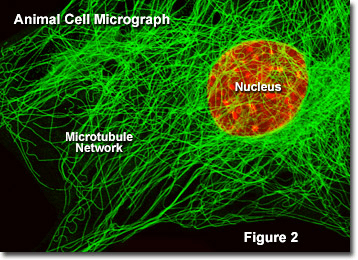
Microtubules are tiny, tube-like structures within cells, and they are particularly significant in neurons, where they play a critical role in maintaining cell shape, facilitating intracellular transport, and supporting cell division. However, their relationship to consciousness, especially within theories of quantum consciousness, is more complex and speculative.
Microtubules and Their Biological Function
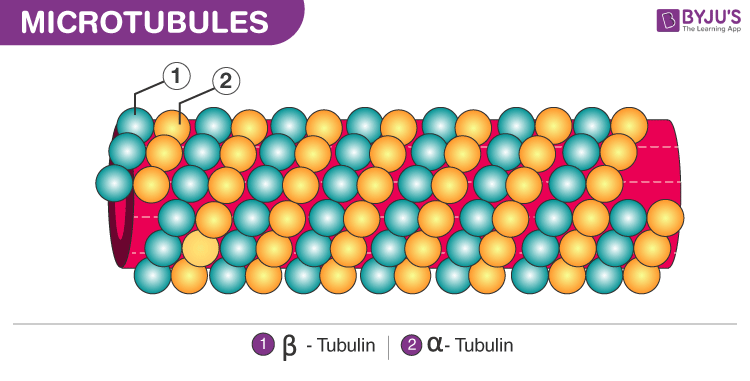
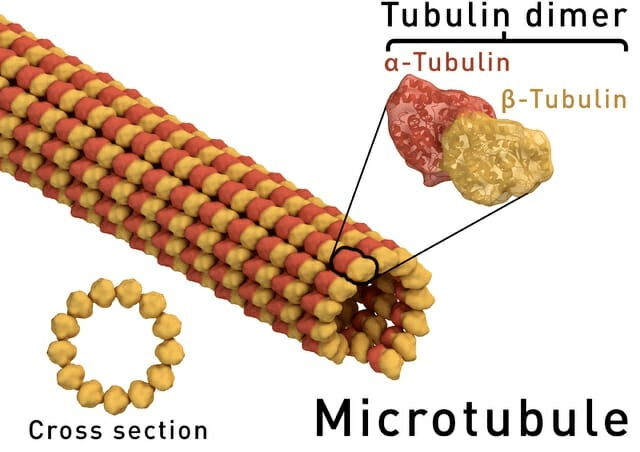
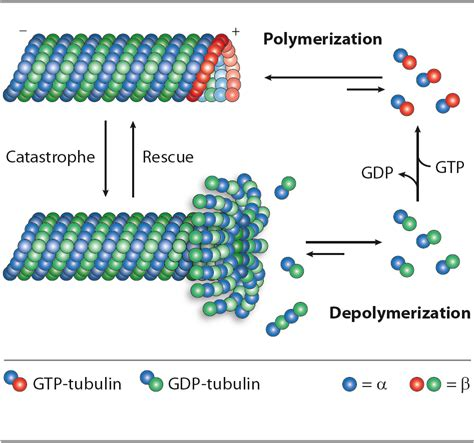
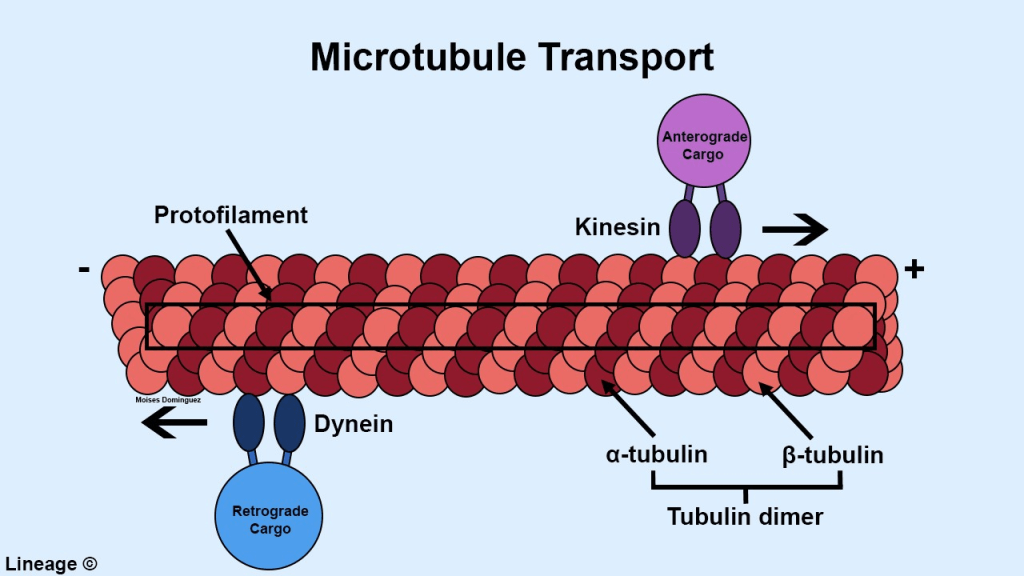
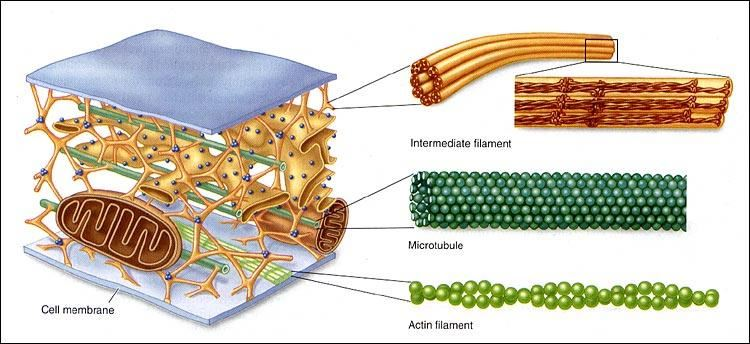
Microtubules are part of the cell’s cytoskeleton, acting as tracks for the movement of cellular components and supporting various cellular activities. In neurons, they facilitate the transport of neurotransmitters and other molecules along axons and dendrites. Microtubules are made up of protein subunits called tubulin, which assemble into a hollow, cylindrical structure. Tubulin proteins are highly dynamic, able to polymerize (assemble) and depolymerize (disassemble) rapidly, allowing microtubules to constantly adjust their length and structure.
Microtubules and Quantum Consciousness
The potential connection between microtubules and consciousness has been explored in theories such as the Orch-OR (Orchestrated Objective Reduction) theory proposed by physicist Roger Penrose and anesthesiologist Stuart Hameroff. This theory suggests that microtubules could support quantum-level computations within the brain, which could play a role in generating consciousness. Here’s a breakdown of how microtubules fit into this hypothesis:
- Quantum Coherence: In the Orch-OR model, microtubules within neurons are thought to function as quantum computers. The tubulin proteins in microtubules can theoretically exist in a state of quantum superposition, where they are in multiple possible states simultaneously. This allows for the complex processing of information, which could potentially contribute to conscious experience.
- Entanglement and Information Processing: The theory proposes that quantum processes within microtubules might be linked across different neurons through quantum entanglement. This would enable a highly integrated network for processing information, forming a basis for unified conscious awareness. While this remains speculative, it aligns with the notion in quantum realism that consciousness could emerge from a quantum processing field rather than purely from physical neural networks.
- Collapse of the Quantum State: In quantum realism, the observer effect—where observation collapses a quantum state—is seen as a possible link to consciousness. The Orch-OR theory suggests that this collapse may occur within microtubules, where the collapse process could correspond to moments of conscious awareness. In this view, consciousness arises not merely as an outcome of neuron firing but through orchestrated quantum events within microtubules.
- Neutral Monism and Consciousness: Quantum realism adopts a neutral monism approach, which suggests that both consciousness and matter derive from a shared quantum reality. Microtubules, acting as quantum processors, could bridge this quantum realm and physical experience, with quantum coherence in these structures supporting the emergent properties associated with consciousness.
To further understand how microtubules might contribute to consciousness and ultimately give rise to brainwaves, we can follow a hypothetical progression from microtubule activity at the quantum level to the macroscopic phenomenon of brainwaves. This involves several levels of processing, from quantum events within neurons to the emergence of complex, coordinated brainwave patterns.
1. Quantum Processes in Microtubules
- In theories like Orch-OR, microtubules within neurons are proposed to act as quantum computers. Within these structures, tubulin proteins could enter states of quantum superposition, meaning that each tubulin molecule can exist in multiple states simultaneously. This superposition enables complex information processing.
- These tubulin molecules are capable of rapid shifts in configuration, theoretically allowing them to perform quantum computations. Quantum entanglement might link tubulin states within a single microtubule or even across different neurons, allowing for a highly interconnected network of quantum processes.
- The theory suggests that consciousness could arise from the collapse of these quantum superpositions within microtubules. When the superposed states collapse to a single outcome, they could correspond to discrete moments of conscious experience, aligning with the idea that consciousness is a series of rapid, continuous events.
2. From Quantum Coherence to Neuronal Activity
- When groups of microtubules in a neuron achieve quantum coherence, they might influence the neuron’s activity in a synchronized way. This coherence could amplify to the level where it affects the neuron’s membrane potential and ultimately leads to action potentials (electrical impulses).
- As multiple neurons undergo synchronized activity due to microtubule-based quantum events, they could fire together in what is called neuronal synchrony. This synchronization is crucial for forming coordinated patterns of neuronal firing, which are foundational to the communication across different brain areas.
- Neurons are organized into complex networks. As coherent activities within microtubules spread to larger networks of neurons, they can produce organized patterns of firing that carry specific types of information across the brain.
3. Neural Oscillations and Brainwave Formation
- The synchronized firing of large numbers of neurons generates neural oscillations or rhythms, which we detect as brainwaves. These oscillations arise because groups of neurons tend to fire in a rhythmic pattern when they are engaged in similar tasks or are synchronized by the same signals.
- Brainwaves represent oscillatory activity within different frequency bands, such as delta (0.5-4 Hz), theta (4-8 Hz), alpha (8-12 Hz), beta (12-30 Hz), and gamma (30-100 Hz) waves. Each of these frequencies is associated with different mental states and cognitive processes. For example:
- Delta waves are common during deep sleep.
- Theta waves are often linked to light sleep, relaxation, and creativity.
- Alpha waves are present during relaxed wakefulness.
- Beta waves are associated with active thinking and focus.
- Gamma waves correlate with high-level information processing and cognitive functioning.
- According to the Orch-OR theory and similar models, quantum coherence within microtubules could be one of the underlying mechanisms that give rise to these synchronized neural oscillations. In this view, the quantum-level events within microtubules don’t just facilitate basic neuronal function; they also contribute to the generation and maintenance of these larger-scale brainwave patterns.
4. The Role of Brainwaves in Consciousness
- Brainwaves are thought to be integral to various aspects of cognition, perception, and conscious experience. By coordinating activity across different brain regions, they allow information to flow efficiently, supporting complex processes like attention, memory, and awareness.
- The quantum processes within microtubules might influence the synchronization of brainwaves, contributing to coherent states of consciousness. As these waves oscillate across the brain, they reflect and possibly facilitate the unity of experience that characterizes consciousness.
In summary, the hypothetical process from microtubules to brainwaves would involve quantum events within microtubules that influence neuronal firing. This synchronized firing would then manifest as brainwaves, which are essential for cognitive functions and the experience of consciousness. This offers a framework for understanding how micro-level quantum processes could potentially give rise to macroscopic brain activity related to consciousness.


 Bantam Joe
Leave a comment