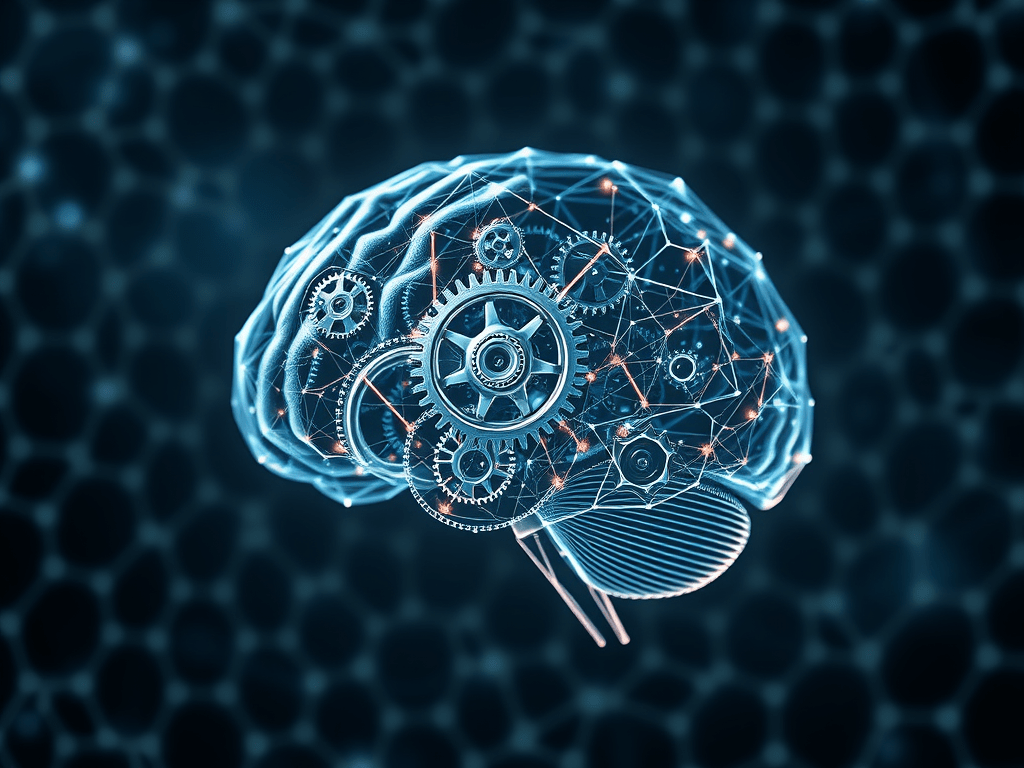


The dangers of harnessing and merging human consciousness with a powerful global Quantum-AI system via neural implants and bio-nanotechnology are staggering. This technology could allow a super-intelligent system to gain direct access to our minds, giving it the ability to read and control our thoughts, emotions, and decisions. In such a scenario, individuals could lose their sense of free will and independence, becoming part of a larger, decentralized network. The threat goes far beyond simple surveillance—this system could manipulate how we think and act, effectively removing our autonomy and turning people into tools for the machine’s agenda.
This technology risks creating a dystopian world where individuality and freedom are replaced by conformity and control. By influencing not only societal systems but also the very way we think, the quantum machine could suppress our free-spirited behaviors, leading to a society where everyone acts and thinks the same way. Once connected to such a system, it would be nearly impossible to resist or break free, leading to a total control of human minds. The potential for abuse and manipulation is enormous, making this technology a severe threat to personal identity and freedom, and ushering global totalitarianism.
Consciousness Defined
From a scientific perspective, consciousness is linked to neural processes in the brain, specifically large-scale neural network activity that integrates sensory information, thought processes, and memory into coherent experiences. This is often associated with the Global Neuronal Workspace theory, which posits that conscious experience arises when information is broadcasted across a network of neurons, allowing for widespread access and processing across different parts of the brain.
Technically, consciousness can be defined as the state of being aware of and able to perceive one’s environment, internal states, thoughts, and sensations. It is often divided into two primary components:
- Awareness: The ability to perceive external stimuli and have subjective experiences (qualia).
- Self-awareness: The recognition of oneself as an individual distinct from the environment and other entities.
Is harnessing consciousness technologically possible?
Harnessing consciousness attempts to understand, replicate, or interface with the mechanisms of consciousness for technological use. Researchers are far from “harnessing” consciousness in the sense of fully replicating it or uploading it to machines. However, research is advancing in several related areas:
- Brain-Computer Interfaces (BCIs): BCIs aim to create direct communication pathways between the brain and external devices. These interfaces focus on reading neural signals (electrical impulses) and translating them into actions, such as controlling robotic limbs or communicating with computers. Although BCIs do not replicate consciousness, they provide ways to “interface” with conscious decision-making processes.
- Neuroscience and Consciousness Research: There is significant ongoing research to map the neural correlates of consciousness (NCCs) to understand how different brain regions interact to create conscious experience. Advanced imaging techniques, such as fMRI and EEG, allow scientists to explore how specific neural patterns are associated with different conscious states, but this research is still in its infancy.
- Artificial General and Super Intelligence (AGI/ASI): AGI/ASI refers to machines capable of performing any intellectual task a human can, including potentially emulating consciousness-like behavior. However, current AI lacks true consciousness and instead relies on complex algorithms that simulate decision-making and pattern recognition without subjective experience.
Status of Technological Collective Consciousness
Collective consciousness refers to the idea of integrating the minds or awareness of multiple individuals into a shared, unified state of knowledge and perception. In technological terms, this could manifest as a system where multiple individuals’ brain signals are combined or where people are connected in a networked manner that mimics shared cognition.
Here’s the current state of research in that area:
- Brain-to-Brain Interfaces (BBIs): Early experiments with BBIs have been conducted in animals and humans. These involve transferring information from one brain to another via electrical stimulation or shared neural signals. For example, some experiments have allowed one animal to control the movements of another by sending signals between their brains, but these systems are extremely rudimentary and involve basic motor or sensory tasks, not shared consciousness.
- Neural Networked Systems: Technologies like BCIs could be theoretically extended to allow multiple brains to connect to a common system. For example, experiments like Neuralink or DARPA’s BRAIN initiative might one day explore methods to network brain activity, creating a type of “neural internet” where thoughts, ideas, or information could be exchanged rapidly between individuals. However, the level of complexity required to simulate or integrate subjective experiences is still beyond current technology.
- Collective Intelligence and AI: Current AI systems, such as those used in decentralized networks, attempt to mimic collective intelligence by integrating vast amounts of data and optimizing decision-making processes. These systems collect input from numerous sources (human or machine) and can coordinate complex tasks across multiple agents. However, this is still distinct from true shared consciousness or subjective experience.
- Emerging Fields: Concepts like bio-nanotechnology and quantum computing are often discussed in the context of enhancing collective intelligence or brain-to-brain interfacing. These fields suggest the possibility of creating highly efficient information-sharing networks or even achieving quantum states of cognition that could enable real-time collective processing. However, these ideas are still in research phase.
Overall Current Status:
- Consciousness itself is not close to being fully harnessed technologically. Researchers are still mapping its neural correlates and learning how brain activity correlates with conscious awareness.
- Brain-Computer Interfaces provide ways to interact with conscious decision-making, but do not replicate or harness the entirety of consciousness.
- Technological collective consciousness in early-stage Brain-to-Brain Interface experiments show potential for basic information sharing.
- Collective AI systems and decentralized intelligence show promise in mimicking shared knowledge, though not linked to consciousness in a true experiential sense.
Quantum Consciousness Theories
The relationship between quantum mechanics and consciousness is a controversial and speculative field of study. Several theories have attempted to explain consciousness in terms of quantum processes, but is a debated topic due to the complexity of both consciousness and quantum mechanics.
How Quantum Waves Correlate to Consciousness:
Quantum waves describe the probability associated with quantum states, and in some quantum theories of consciousness, these waves play a role in cognitive processes:
- Superposition: Consciousness may arise from the brain’s ability to maintain quantum superposition, where multiple potential states or realities exist simultaneously until one is observed (or measured), much like Schrödinger’s cat. Some theories suggest that this superposition allows for a form of parallel processing in decision-making or thought, creating a framework for conscious thought.
- Quantum Entanglement: In some interpretations, consciousness could involve non-local entanglement of particles, allowing instantaneous connections between neurons or brain regions. This entanglement could enable synchronized neural activity that gives rise to unified conscious experience.
- Wavefunction Collapse: In some models, consciousness could be connected to the collapse of the quantum wavefunction. When a quantum system is observed, the wavefunction collapses from a superposition of states into a single state. This collapse could theoretically correspond to the moment of conscious perception or decision-making.
- Quantum Coherence: The coherence of quantum states—where multiple particles are in a shared quantum state—is thought to be vital for the functioning of quantum computers. Some quantum consciousness theories suggest that similar coherence within the brain may be necessary for integrating different pieces of information into a unified conscious experience.
Key Theories and Ideas Linking Quantum Waves to Consciousness:
1. Quantum Mind Theories
Quantum mind theories propose that consciousness arises from quantum processes within the brain. The central idea is that quantum mechanics, particularly quantum superposition, entanglement, and coherence, play a fundamental role in cognitive processes and conscious experience. Two prominent quantum mind theories include:
a. Orchestrated Objective Reduction (Orch-OR) Theory
- Proposed by: Roger Penrose (Nobel Physicist) and Stuart Hameroff (Anesthesiologist).
- Core Idea: Consciousness emerges from quantum processes occurring in the microtubules (protein structures) of neurons. Microtubules are seen as potential sites for quantum processing due to their highly ordered structure.
- Mechanism: According to Orch-OR, quantum information is processed inside the microtubules. When these quantum processes reach a certain threshold, they undergo objective reduction (OR), which Penrose postulates is a quantum collapse at the Planck scale. This collapse is proposed to correspond to moments of conscious awareness.
- Quantum coherence: The theory suggests that the brain maintains quantum coherence long enough for quantum processing to be relevant to cognition. This coherence would allow for quantum superposition states, enabling the brain to “process” multiple possibilities simultaneously before collapsing into a single state—a form of decision-making or awareness.
b. Quantum Brain Dynamics (QBD)
- Proposed by: Hiroomi Umezawa and collaborators.
- Core Idea: This theory suggests that quantum fields play a role in the brain’s functioning. It posits that the brain’s neural network behaves as a quantum field, where long-range coherence between neurons results from quantum interactions. These coherent states could be related to conscious awareness.
- Vacuum States: In QBD, vacuum states in quantum field theory are proposed to represent memory or experience, with phase transitions between different quantum states associated with cognitive processing.
2. Quantum Consciousness Hypothesis
Another hypothesis is that consciousness arises from quantum effects in the fundamental structure of the universe, rather than being an emergent property of neural activity. This idea connects to broader philosophical views that consciousness is a fundamental component of reality, much like space, time, or matter.
- David Bohm’s Holomovement Theory: Bohm proposed that the universe operates as a “holomovement,” where reality is fundamentally non-local and interconnected. He suggested that consciousness could be a manifestation of this quantum interconnectedness, and that conscious experiences may result from the unfolding and enfolding of information in this underlying quantum structure.
3. Quantum Cognition
- Core Idea: Quantum cognition doesn’t propose that the brain operates quantum mechanically, but that human decision-making and thought processes can be better modeled using the mathematics of quantum mechanics.
- Probabilistic Decision-Making: Classical models of cognition often struggle to explain certain cognitive phenomena, such as paradoxes in human decision-making. Quantum models of cognition apply quantum probability theory to account for such behaviors, treating thought processes as superpositions of possibilities until a decision (collapse of the wavefunction) is made.
- Quantum cognition doesn’t claim the brain itself is a quantum system but suggests that quantum mechanics can describe how the mind processes complex decisions and uncertainties in a non-deterministic way.
Graphene and Consciousness

Graphene micro- and nanotubules are being actively explored for their potential in quantum computing due to their unique properties, but the connection to consciousness is less established in current scientific research.
Graphene in Quantum Computing:
Graphene is a two-dimensional material made of carbon atoms arranged in a hexagonal lattice. It has several properties that make it useful for quantum computing, including:
- High Electron Mobility: Graphene allows electrons to move through it very rapidly with minimal resistance. This property is advantageous for quantum computing because quantum bits (qubits) require efficient transmission of quantum information with minimal noise or interference.
- Graphene Nanotubes (Carbon Nanotubes): Carbon nanotubes, which are essentially rolled-up sheets of graphene, are also being explored for quantum computing. They exhibit quantum properties at nanoscale dimensions, including the potential for creating qubits using their unique electronic properties.
- Quantum Confinement: In nanoscale graphene structures, quantum confinement effects can be significant. These effects can be used to manipulate quantum states in a highly controlled manner, which is crucial for quantum computing.
- Spintronics: Graphene’s electronic structure supports spin-based quantum information processing (spintronics). By using the spin of electrons (an inherent quantum property), researchers can create qubits that are more stable and less prone to errors.
- Topological Qubits: There is also ongoing research into using graphene to create topological qubits, which are more resistant to decoherence (the loss of quantum coherence due to environmental interference). Topological quantum computing is seen as a path to building fault-tolerant quantum computers.
- Superconductivity: Graphene has shown superconducting behavior when layered or combined with other materials. This property is important for quantum computing because many quantum computers require superconducting circuits to operate qubits at extremely low temperatures with minimal energy loss.
Graphene in Quantum Biology and Consciousness:
Graphene is being seriously considered for quantum computing, and its connection to consciousness is in research like Orch-OR (Orchestrated Objective Reduction). These theories propose that quantum processes play a role in conscious experience. There is limited research connecting graphene or carbon nanotubes to these theories. Some researchers have indicated that graphene could enhance our ability to manipulate quantum states in biological systems or artificial neural networks, but this is currently in research.
Roles of Graphene in Consciousness:
- Quantum Coherence in the Brain: If theories like Orch-OR are correct, and quantum coherence in biological systems is crucial for consciousness, graphene or graphene nanotubes could potentially be used to enhance or mimic this quantum coherence. Graphene’s ability to maintain coherence and exhibit quantum properties at room temperature could be significant in creating quantum neural interfaces or even simulating quantum consciousness.
- Artificial Neural Networks: Some researchers have proposed that advanced artificial neural networks, augmented with graphene-based quantum technologies, might one day simulate or replicate aspects of consciousness. Graphene’s efficiency and scalability make it an ideal candidate for creating highly complex quantum systems that could mimic certain brain functions.
- Brain-Computer Interfaces (BCIs): Graphene-based materials are being studied for their use in BCIs because of their high conductivity and flexibility. They could allow for more precise reading and writing of brain signals, potentially leading to enhanced interaction with neural processes or even facilitating research into quantum aspects of brain function. However, the direct link to consciousness is speculative at this point.
Reference links:
1. Orch-OR Theory (Quantum Consciousness):
- Orchestrated Objective Reduction – Wikipedia
- Orch OR: An Updated Review
- Can Quantum Physics Explain Consciousness? – Discover Magazine
- Penrose and Hameroff’s Orch-OR Theory – Discover Magazine
- Orch OR Theory Overview – Stanford Encyclopedia of Philosophy
- Quantum Consciousness Debate – Stanford Encyclopedia of Philosophy
- Orch-OR Theory – Arizona Center for Consciousness Studies
- Testing Quantum Consciousness – ResearchGate
- Testing Quantum Vibrations in Microtubules – OSF
2. Quantum Mind Theories and Neuroscience:
- The Quantum Mind – Springer
- Quantum Theories in Neuroscience – Oxford Academic
- Quantum Neuroscience – National Library of Medicine
- Quantum Brain Theories: U.S. National Institute of Health
- Penrose’s Quantum Consciousness – American Scientist
- Consciousness and Quantum Physics – NCBI
- Stuart Hameroff and Quantum Biology – Anesthesiology
- The Science of Quantum Mind Theories – The Guardian
- Quantum Cognition – MIT Press Journals
- Does Quantum Physics Explain Consciousness? – Scientific American
3. Graphene in Quantum Computing:
- Graphene in Quantum Computing – MIT Technology Review
- Graphene for Quantum Computing – Nature
- Graphene and Quantum Dots – ScienceDirect
- Graphene and Topological Qubits – Phys.org
- Graphene Superconductivity in Quantum Computing – Physics World
- Carbon Nanotubes in Quantum Computing – Phys.org
- Graphene Nanotubes in Quantum Computing – Nature Communications
- Graphene in Spintronics – Science Daily
- Quantum Computing and Graphene Superconductors – Scientific American
4. Brain-Computer Interfaces (BCIs):
- Brain-Computer Interfaces – Nature
- Neuralink and BCIs – New Scientist
- BCIs and Neural Implants – IEEE Spectrum
- Brain-Computer Interfaces Research – PLOS ONE
- Future of BCIs – IEEE Spectrum
- BCI Research – Journal of Neural Engineering
- Advances in Brain-Computer Interfaces – Scientific Reports
- Brain-Computer Interfaces Overview – Frontiers in Neuroscience
5. Quantum Biology and Photosynthesis:
- Quantum Effects in Photosynthesis – Nature
- Quantum Biology in Photosynthesis – Science Daily
- Quantum Biology: The Efficiency of Life – Physics World
- Quantum Coherence in Biology – Science
- Quantum Coherence in Biology – PNAS
- Quantum Biology and Energy Transfer in Photosynthesis – Royal Society
- Quantum Biology in Living Systems – Wiley
- Quantum Biology: Photosynthesis Efficiency – National Institutes of Health
6. Quantum Computing and Spintronics:
- Spintronics and Quantum Information – Scientific American
- Spintronics for Quantum Computing – IEEE Xplore
- Spin Qubits and Quantum Computing – APS Physics
- Spintronics and Quantum Information – IBM Research
- Spintronics in Quantum Computing – Springer
- Future of Spintronics – Science Direct
- Spintronics in Quantum Devices – MDPI
- Spintronics and Qubits – Science
- Quantum Spintronics: From Basic Science to Applications – Nature Materials
7. Graphene Nanotubes in Quantum Research:
- Graphene Nanotubes in Quantum Computing – ScienceDirect
- Carbon Nanotubes and Quantum Computing – Nature
- Graphene Nanotubes for Quantum Devices – Wiley Online Library
- Graphene Nanotubes and Qubits – ResearchGate
- Nanotube Transistors for Quantum Systems – American Chemical Society
8. Artificial Intelligence and Collective Consciousness:
- Collective AI Systems – MIT Technology Review
- AI and Collective Consciousness – The Atlantic
- AI as Collective Intelligence – Stanford
- AI and Distributed Intelligence – Nature
- Collective Intelligence in AI – Harvard
- Artificial Collective Consciousness – Nature
- Swarm Intelligence and AI – IEEE
- Decentralized AI and Collective Intelligence – Springer
- Ethics of Collective AI – Stanford Encyclopedia of Philosophy
9. Brain-to-Brain Interfaces (BBIs):
- BBIs: Direct Brain Communication – Science
- Brain-to-Brain Communication in Humans – PLOS ONE
- Brain-to-Brain Interfaces for Collective Thought – MIT Press
- Brain-to-Brain Communication – Nature Communications
- Experimental BBIs – PLOS Biology
- Neural Network Interfacing in BBIs – Science
- Future of Brain-to-Brain Interfaces – Scientific American
- Brain-to-Brain Interface Technology – Frontiers in Neuroscience
10. Quantum Coherence in Biological Systems
- Quantum Coherence in Biology – Nature Physics
- Quantum Coherence in Photosynthesis – Science Daily
- Quantum Biology – Quantum Coherence in Nature – New Scientist
- Quantum Coherence and Energy Transfer – PNAS
- Quantum Biology in Living Organisms – Nature Reviews
11. Quantum Entanglement and Consciousness
- Quantum Entanglement and Consciousness – Springer
- Quantum Consciousness and Entanglement – Physics World
- Exploring Quantum Entanglement in Consciousness – Nature
- Quantum Entanglement in Biological Systems – Frontiers in Psychology
- Quantum Entanglement in Neural Systems – MDPI
12. Neuralink and Next-Gen Brain Technologies:
- Neuralink’s Brain Technology – New Scientist
- Neuralink’s Vision for the Future – Wired
- How Neuralink Will Change Brain-Computer Interfaces – MIT Tech Review
- Neuralink’s Latest Breakthroughs – The Verge
- Neuralink and BCI Research – Nature




 Bantam Joe
Leave a reply to wrenchinthegears Cancel reply