


xAPI (Experience API), also known as Tin Can API, is a technology standard that allows for the tracking and recording of human learning experiences and activities in a wide range of contexts, both online and offline.
It is used by the DoD’s Advance Distributed Learning Initiative | Defense Human Resources Activity | Defense Support Services Center, Which provides Total Learning Architecture (TLA), TLA enables personalized, data-driven, and technology-enabled lifelong learning. The xAPI is now an IEEE standard, becoming the first open source standard in IEEE’s history!
In addition, it is used by the military, educational schools systems, universities, corporations and online e-learning organizations.
It works by enabling systems to communicate and exchange data about learning experiences and activities through structured statements, providing a more flexible and comprehensive approach to tracking learning than previous standards like SCORM (Sharable Content Object Reference Model).
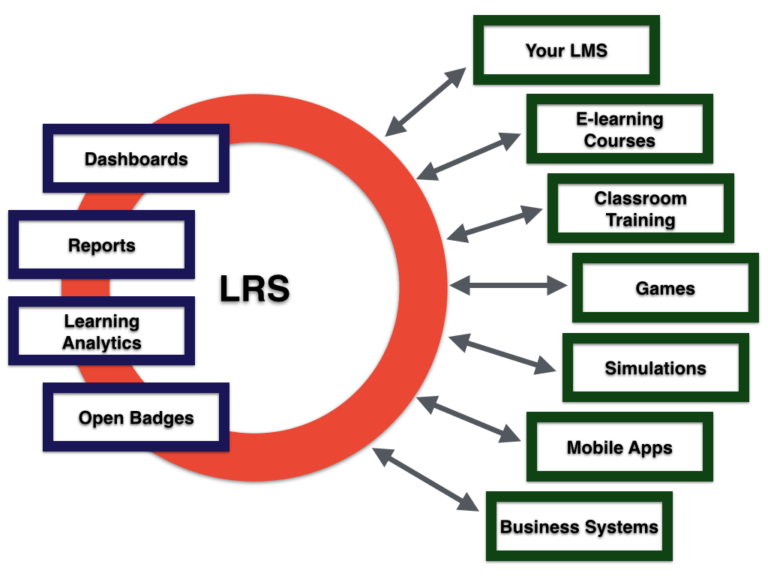
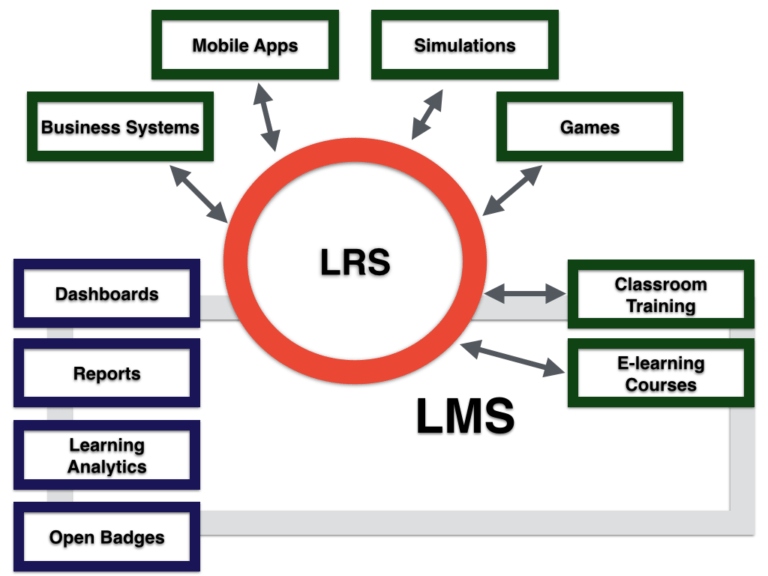

Here’s how xAPI works with examples:
- Statement Structure: xAPI statements follow a simple structure of “Noun, verb, object” or “I did this.” For example:
- Noun: “John”
- Verb: “completed”
- Object: “the online course on cybersecurity.”
- Statement: “John completed the online course on cybersecurity.”
- Learning Record Store (LRS): When a learning activity needs to be recorded, such as completing a module in an e-learning course or attending a workshop, the application or system involved sends a secure statement to a Learning Record Store (LRS). The LRS acts as a repository for all the learning statements made. For example:
- John’s completion of the online cybersecurity course is sent as a statement to the LRS.
- Statement Freedom: xAPI offers freedom in the structure of statements, allowing for the recording of almost any learning activity. This includes not just traditional e-learning activities but also interactions with simulations, games, physical objects, and more. For example:
- John’s use of a CPR dummy during a first aid training session can be recorded as a statement: “John practiced CPR on the dummy.”
- History Freedom: xAPI allows LRSs to communicate with each other, enabling data sharing and transfer of learning records between different systems or organizations. This means that John’s learning experiences can follow him from one organization to another, providing a comprehensive view of his learning history. For example:
- John’s completion of the cybersecurity course at one organization’s LRS can be shared with another organization’s LRS when he applies for a job.
- Device Freedom: Any enabled device can send xAPI statements, including mobile phones, tablets, computers, wearables, and even physical objects equipped with sensors. This means that learning activities can be tracked anywhere, regardless of the device used. For example:
- John’s completion of a safety training module on his smartphone while commuting to work can be recorded as a statement: “John completed the safety training module on his smartphone.”
- Workflow Freedom: Tracking learning events with xAPI doesn’t have to start or end in a Learning Management System (LMS). Learning experiences can begin wherever the learner is and on whatever device they choose to use. This flexibility allows for a more seamless and integrated approach to tracking learning activities. For example:
- John’s completion of a hands-on workshop can be recorded directly in the workshop’s mobile app, bypassing the need for an LMS.
In short, xAPI works by enabling the recording, tracking and sharing of learning experiences through structured statements sent to Learning Record Stores.

In an authoritarian world, xAPI can be used to track a wide range of action-experiences beyond just learning-activities. While xAPI was initially developed with a focus on learning, its flexible structure and capabilities make it suitable for tracking various types of interactions and experiences. Here’s how xAPI could be used to track action-experiences in an authoritarian context:
- Social Interactions: xAPI statements could be generated to track social interactions (using AI recognition, sensors and digital ID), such as conversations, meetings, or gatherings, providing insights into individuals’ social networks and behaviors.
- Workplace Activities: xAPI could be employed to track work-related activities (using AI recognition, sensors and digital ID), such as tasks completed, projects worked on, or time spent on different assignments, allowing for monitoring and evaluation of productivity and performance.
- Health and Wellness: xAPI could be utilized to track health and wellness activities (using AI recognition, sensors and digital ID), such as exercise routines, medical appointments, or dietary habits, providing data for surveillance and control measures related to public health.
- Consumer Behavior: xAPI statements could be generated to track consumer behavior (using AI recognition, sensors and digital ID), such as purchases made, websites visited, or products searched for online, enabling targeted marketing and consumer profiling.
- Travel and Movement: xAPI could be used to track individuals’ travel and movement patterns (using AI recognition, sensors and digital ID), including locations visited, modes of transportation used, and frequency of trips, facilitating surveillance and control of population movements.
- Political Activities: xAPI statements could be generated to track political activities (using AI recognition, sensors and digital ID), such as participation in protests, attendance at political rallies, or interactions with political content online, enabling monitoring and suppression of dissent.
- Criminal Behavior: xAPI could be employed to track criminal behavior (using AI recognition, sensors and digital ID), such as suspicious activities, illegal transactions, or interactions with known criminals, aiding in law enforcement and crime prevention efforts.
- Environmental Impact: xAPI statements could be generated to track individuals’ environmental impact (using AI recognition, sensors and digital ID), such as energy consumption, waste production, or carbon footprint, informing authorities of behaviors.
- Entertainment and Leisure: xAPI could be used to track individuals’ entertainment and leisure activities (using AI recognition, sensors and digital ID), such as movies watched, games played, or music listened to, providing insights into preferences and behaviors for targeted content delivery.
- Personal Development: xAPI statements could be generated to track personal development activities (using AI recognition, sensors and digital ID), such as self-improvement initiatives, skill-building exercises, or mental health practices, supporting surveillance and control measures related to personal growth and well-being.
In an authoritarian world, xAPI could serve as a tool for tracking a wide range of action experiences beyond learning, enabling comprehensive surveillance and control of individuals’ behaviors and interactions.
The integration of xAPI with other oppressive systems such as AI, blockchain, surveillance, social & carbon credit systems, digital ID, biometrics, CBDC, smart-contracts, etc., would enable the authoritarian regime to extensively track and control both the learning experiences and actions of citizens for the purpose of subjugating and oppressing humanity. Here are 50 examples:
- Learning Content Surveillance: Employ xAPI to monitor citizens’ interactions with educational content, identifying dissenting or subversive ideologies for suppression.
- Behavioral Profiling through Learning Data: Analyze xAPI learning data to create behavioral profiles, enabling targeted surveillance and manipulation.
- Blockchain-linked Learning Credentials: Issue blockchain-linked learning credentials based on xAPI data, controlling access to employment and opportunities.
- AI-driven Learning Path Personalization: Utilize AI to personalize learning paths based on xAPI data, reinforcing indoctrination efforts.
- Surveillance-backed Learning Environment Adaptation: Adapt learning environments based on real-time surveillance data and xAPI statements to reinforce obedience.
- Social Credit-based Learning Rewards: Reward compliant behavior with access to exclusive learning resources based on xAPI data and social credit scores.
- Learning Progress Contracts on Blockchain: Enforce learning progress contracts stored on blockchain, tied to individuals’ xAPI data, ensuring compliance.
- AI-curated Propaganda through Learning Data: Curate propaganda messages based on xAPI learning data, maximizing effectiveness of indoctrination.
- Digital ID-linked Learning History: Link xAPI learning history to digital ID profiles, enabling comprehensive surveillance and control.
- Behavioral Modification via Learning Simulations: Develop AI-driven learning simulations to condition desired behaviors using xAPI data.
- CBDC-based Learning Transaction Tracking: Track learning transactions using CBDC, tied to individuals’ xAPI data, for auditing and control.
- Surveillance-driven Learning Peer Monitoring: Monitor interactions during learning activities using surveillance data and xAPI statements, encouraging conformity.
- Smart-contract enforced Learning Obligations: Enforce learning obligations through smart contracts linked to xAPI data, penalizing non-compliance.
- AI-generated Learning Content Manipulation: Dynamically manipulate learning content based on AI analysis of xAPI data to reinforce indoctrination.
- Biometric-linked Learning Performance Monitoring: Monitor biometric data during learning activities, tied to xAPI statements, for performance assessment.
- Surveillance-backed Learning Social Norm Enforcement: Enforce social norms within learning environments using surveillance data and xAPI statements.
- Carbon Credit-based Learning Access: Restrict access to learning resources based on carbon credit scores derived from xAPI data, limiting dissenters’ opportunities.
- Digital ID-based Learning Space Restrictions: Restrict access to learning spaces based on digital ID profiles and xAPI data, segregating non-compliant individuals.
- Blockchain-tracked Learning Attendance: Track learning attendance on blockchain using xAPI statements, ensuring participation in indoctrination sessions.
- AI-enhanced Learning Assessment Automation: Automate learning assessments using AI algorithms analyzing xAPI data, identifying non-compliant behaviors.
- Surveillance-backed Learning Performance Surveillance: Monitor learning performance in real-time using surveillance data and xAPI statements.
- Social Credit-linked Learning Space Allocation: Allocate learning spaces based on social credit scores derived from xAPI data, segregating dissidents.
- Digital ID-based Learning Content Censorship: Censor learning content based on digital ID profiles and xAPI data to suppress dissenting ideologies.
- Blockchain-tracked Learning Achievement Badges: Award achievement badges stored on blockchain based on xAPI learning records, signaling compliance.
- AI-driven Learning Intervention Strategies: Develop AI-driven intervention strategies based on xAPI data to target dissenters effectively.
- Surveillance-backed Learning Progress Tracking: Monitor learning progress in real-time using surveillance data and xAPI statements, identifying resistance.
- Social Credit-based Learning Opportunities: Provide learning opportunities based on social credit scores derived from xAPI data, rewarding compliance.
- Digital ID-linked Learning Environment Manipulation: Manipulate learning environments based on digital ID profiles and xAPI data to induce obedience.
- Blockchain-tracked Learning Resource Distribution: Distribute learning resources on blockchain using xAPI data, prioritizing indoctrination efforts.
- AI-powered Learning Experience Optimization: Optimize learning experiences using AI algorithms analyzing xAPI data, maximizing indoctrination effectiveness.
- Surveillance-backed Learning Peer Surveillance: Monitor interactions with peers during learning activities using surveillance data and xAPI statements.
- Social Credit-based Learning Progress Penalties: Penalize slow learning progress based on social credit scores derived from xAPI data, incentivizing compliance.
- Digital ID-linked Learning Transcript Verification: Verify learning transcripts using digital ID profiles and xAPI data, ensuring adherence to regime narratives.
- Blockchain-tracked Learning Achievement Certificates: Issue achievement certificates on blockchain tied to xAPI learning records, validating compliance.
- AI-enhanced Learning Content Personalization: Personalize learning content using AI algorithms analyzing xAPI data, tailoring information to reinforce indoctrination.
- Surveillance-backed Learning Social Credit Rewards: Reward high social credit scores derived from xAPI data with access to exclusive learning opportunities.
- Digital ID-based Learning Performance Rankings: Rank learning performance based on digital ID profiles and xAPI data, influencing social status.
- Blockchain-tracked Learning Progress Contracts: Enforce learning progress contracts stored on blockchain, tied to xAPI data, ensuring compliance.
- AI-driven Learning Content Manipulation: Manipulate learning content dynamically based on AI analysis of xAPI data to reinforce indoctrination.
- Surveillance-backed Learning Space Adaptation: Adapt learning spaces based on real-time surveillance data and xAPI statements to reinforce obedience.
- Social Credit-based Learning Rewards and Penalties: Reward compliant behavior and penalize dissent through incentives and punishments tied to social credit scores derived from xAPI data.
- Surveillance-driven Learning Environment Manipulation: Manipulate learning environments based on real-time surveillance data and xAPI statements to induce desired behaviors.
- Blockchain-tracked Learning Credential Issuance: Issue learning credentials stored on blockchain, tied to individuals’ xAPI learning records, controlling access to opportunities.
- AI-curated Learning Paths: Curate personalized learning paths for individuals based on AI analysis of their xAPI data, guiding them towards obedience.
- Surveillance-backed Learning Performance Rankings: Rank individuals’ learning performance based on surveillance data and xAPI statements, influencing social status.
- Social Credit-based Learning Space Allocation: Allocate learning spaces based on social credit scores derived from xAPI data, segregating dissidents.
- Blockchain-tracked Learning Achievement Certificates: Award achievement certificates stored on blockchain based on xAPI learning records, validating compliance.
- AI-enhanced Learning Content Personalization: Personalize learning content using AI algorithms analyzing xAPI data, tailoring information to reinforce indoctrination.
- Surveillance-backed Learning Social Credit Rewards: Reward high social credit scores derived from xAPI data with access to exclusive learning opportunities.
- Digital ID-based Learning Performance Rankings: Rank learning performance based on digital ID profiles and xAPI data, influencing social status.
These examples illustrate the extensive ways in which xAPI technology could be harnessed by a authoritarian regime to surveil, control, and oppress humanity, when integrated with other oppressive systems and technologies.
Make a one-time donation
Make a monthly donation
Make a yearly donation
Choose an amount
Or enter a custom amount
Your contribution is appreciated. Thank you!
Your contribution is appreciated.
Your contribution is appreciated.
DonateDonate monthlyDonate yearly


 Bantam Joe
Leave a comment